Showing posts with label jazz. Show all posts

Friday, March 20, 2015

Spring is Here (1938)


The first chart hit version of Richard Rodgers and Lorenz Hart's 1938 composition "Spring is Here", as adapted from the Broadway production of I Married an Angel. Reisman was an extremely popular bandleader during the 1930s who enjoyed success with his recordings of several songs that were to become jazz standards including "Yesterdays" and "Alone Together". The vocal refrain on his version of "Spring is Here" was by Felix Knight, known by most Statesiders of a certain age and older as Tom-Tom in Laurel and Hardy's Babes in Toyland.


4 years later, the song reached a wider audience courtesy of Jeanette McDonald and Nelson Eddy's performance of the song in the drastically tamer film version of I Married an Angel. The movie was a box-office and critical failure, known in the history books more for what it might have been rather than what audiences saw in the theaters. One can thank the Hays Code and its neutering effect on a lot of film adaptations of contemporaneous Broadway source material.


The first jazz version of song is a matter that is in dispute. The 1954 10" LP (and 7" EP) Interpretations by the Stan Getz Quintet featured a stand-out early adoption of the tune by younger modernists. Recorded in the Summer of 1953 in Los Angeles for Norman Granz's Norgran label, Getz was joined by Bob Brookmeyer on valve trombone, Johnny Williams (as in, yes, that John Williams) at the piano, Teddy Kotick playing the bass, and Frank Isola behind the drums.

For more details about this composition and its history, I heartily recommend the JazzStandards.com entry here.

Wednesday, November 19, 2014

Reid Miles (1956)


Patterns in Jazz by Gil Melle, Blue Note 12" LP 1517, 1956, cover design by Reid Miles

I know. I can hear it now. The last thing the internet needs is another blog post singing the praises of Reid Miles and his 12-year stint (1955 through 1967) as the principle LP artwork designer for Blue Note Records! Right? Well, of course one cannot laud Miles enough: his work for the New York jazz label was a masterful high-water mark of mid-century modernist design. But there was certainly more to  this well-known figure whose full story has remained remarkably illusive.


Mobley's Message by Hank Mobley, Prestige 12" LP 7061, 1956, cover design by Reid Miles

Born in Chicago on the 4th of July in 1927, Miles actually grew up on the West Coast of California. After the stock market crash of '29, his family moved out west as so many other families did during the Great Depression and ended up in Long Beach. A marital split left Miles in the care of his mother who supported he and his younger sister by working in a cannery in San Pedro. Most of his youth is undocumented, although it is known that Miles joined the U.S. Navy near the end of the Second World War, serving as a chauffeur. Upon his discharge he returned to Los Angeles and, according to Wayne Adams who would later assist Miles in the 1980s, chased after a girl and wound up enrolled in the Chouinard Art Institute. Chouinard was then located in MacArthur Park and would merge with the LA Conservatory of Music to form CalArts in 1961. Other Chouinard alumni, whose names will be familiar to regular readers of this blog, include graphic designer S. Neil Fujita and pop artist Ed Ruscha. Rushca and Miles almost certainly never crossed paths that the school as the former did not enroll until the mid-1950s. However, it is very likely that Fujita and Miles met at Chouinard as both attended the school around the same time - a very interesting idea considering how Fujita would later find him on the East Coast designing LP covers for Columbia Records a few years after studying in LA.


Herbie Nichols Trio by Herbie Nichols, Blue Note 12" LP 1519, 1956, cover design by Reid Miles

The person at Chouinard with whom Miles most definitely came into contact was the eventual head of the basic design program, Bill Moore. Moore is something of a West Coast design/art/animation legend who influenced generations of students over the course of nearly 40 years at Chouinard and CalArts. He is the thread the ties together such disparate names as Reid Miles, Ed Ruscha, Tim Burton, and Brad Bird - all of whom studied with Moore. Miles apparently had very little influences in his design life, but Moore was one of them and an early one at that.


Olio by Thad Jones, Prestige 12" LP 7084, 1956, cover design by Reid Miles

Leaving Chouinard before completing the courses required for graduation, Reid Miles made a bee line for New York City, scoring a job with designer John Hermansader. The timing was certainly right as Hermansader, through his friend and fellow designer Paul Bacon, began working with Blue Note Records in 1953 not too long after Miles arrived on the scene. Here is where the story gets a little hazy. While it is known that Miles worked on the Blue Note account, it is not known how much of the early (1953-1955) work was done by Hermansader, how much was done by Miles, and how much was a collaboration. May we indulge in some speculation? Based on the collective body of work Hermansader provided for Blue Note, he quite feasibly could have been another big influence on Miles.
Blue Note historians tend to downplay Hermansader's contributions, but his other surviving examples of visual art clearly indicate a notable talent. The raw materials are there in the work which Miles would develop into an art by the end of the decade, but the question remains just how much input Miles had into the Blue Note designs early on. Unfortunately, neither man is alive today to discuss and the period is poorly documented. At any rate, Miles - who would develop a history of transience - left Hermansader in 1955 for a job with Esquire magazine doing the layout and paste-up work. However, whatever his contributions were to Hermansader's Blue Note account, they were significant enough to catch the attention of the label's owners Alfred Lion and Francis Wolff who asked him to take a lead role in the design of 12-inch Long Playing records, the format that by mid-decade had emerged as the preferred format of most jazz releases industry-wide. Esquire was apparently well-aware of this arrangement and allowed Miles to moonlight - which usually meant working on 3 or so Blue Note LP covers on his Saturday off from the magazine, being paid $50 a job/cover. Later interviews would reveal Miles to be would could be termed a workaholic, in that to him his work was his life and the absence of former made the latter unbearable at times.


J.R. Monterose, Blue Note 12" LP 1536, 1956, cover design by Reid Miles

Contributing to an even more hazy story is the fact that a year after this transition and for a time space of nearly 2 years, Miles was also contributing 12" LP jacket designs to Blue Note's de facto, if not friendly rival Prestige Records. From 1956 until 1957, his name graced the jackets of nearly a dozen discs. Interestingly, this work is seldom cited by design aficionados, although there are some excellent covers that easily rival his contemporaneous work for Blue Note. There are definitely some similarities between the covers and one can see his style developing which each subsequent release. So here is one artist, simultaneously providing the visuals for some of the important modern jazz music recorded of its time (or any time for that matter). And, of course, Miles was famously not a fan of jazz, preferring classical. But this period is interesting, mainly as it is of such high quality and yet overlooked by most design fans.


Quadrama by the Gil Melle Quartet, Prestige 12" LP 7097, 1956, cover design by Reid Miles

A third influence should be mentioned at this time. After Moore and possibly Hermansader, Miles other major influence of the time was known to be Saul Bass. Bass needs no significant introduction to readers of this weblog, but it is perhaps helpful to put him into historical perspective. At the time that Miles was accepting a job with Esquire and getting down to business in earnest with Blue Note and Prestige, Bass was gaining widespread notoriety first for his work on the posters and titles for Carmen Jones (1954) and even more so for The Man With The Golden Arm (1955). His greatest innovation was perhaps the liberation of type from the galley, finding new ways to communicate the written word that flew (sometimes, literally) in the face of convention. Of course, in the design world Bass is a true legend and this history books have been kind to the legacy he has left behind.


6 Pieces of Silver by the Horace Silver Quintet, Blue Note 12" LP 1539, 1956, cover design by Reid Miles

Reid Miles perhaps enjoyed his most lucrative years well after his run with Blue Note. Some time in the early-1960s he started focusing on photography. By mid-decade it was his main focus. Miles returned to Los Angeles in 1971 and within a few years established a style and clientele that made him quite successful by anyone's terms - although he retained a drive and passion for his work which lasted until his death in 1993. Miles occasionally returned to album covers during the second act of his career, but his style by then had changed so significantly that few people made the connection. Fortunately, his mid-'50s experiments are well documented and, hopefully, well preserved for the ages.

Wednesday, June 18, 2014

Portrait of a Spanish Poet (1959)

Portrait of a Spanish Poet by John Altoon, completed 1959

Los Angeles born artist John Altoon, spent nearly 5 years working on the painting he titled Portrait of a Spanish Poet. Often subtitled (Lorca), the piece is ostensibly a portrait of Spanish writer Federico García Lorca. It was completed in 1959 (the same year Altoon married B movie and television actress Fay Spain) and was included in Altoon's second solo show at the Ferus Gallery in 1961. By the time of that show Ferus had moved to its second location at 723 North La Cienega in West Los Angeles and had been under the direction of Irvin Blum for 3 years. Altoon's relationship with the gallery was firmly established by the late-'50s, being represented by Ferus. The painter had yet to fully transition to the more figurative approach he adopted in the 1960s, with the work being very much a product of his exposure to Abstract Expressionism due to his time spent in New York City as well as the Bay Area  School with exerted a strong influence on the LA art scene during the 1950s. 

John Altoon, Tony Lanreau, and Maggie Ryan, Venice, California, photo by William Claxton, 1959

The painting and Altoon made a cameo appearance on the dust jacket of the original 1959 edition of Laurence Lipton's The Holy Barbarians, the writer's survey of Beat Culture at the turn of the decade. Many (most?) had no idea that that giddy, shirtless beatnik in William Claxton's photo had painted the work of art hanging on the wall behind him, much less that he was the heart and soul of the burgeoning Ferus Gallery scene in West Los Angeles and Venice Beach. The connection was likely more due to Claxton, rather than Altoon laying any Beat Generation claims as the modern art circles on both Coasts tended to distance themselves from the Beat poets in spite of any lifestyle similarities.


Jazz Guitar: Jim Hall, Pacific Jazz 1227 12" LP, 1957, cover photo by William Claxton featuring John Altoon

Clax also played a role in Altoon's slightly earlier entree to mainstream exposure. As the staff photographer and cover art director for Dick Bock's Pacific Jazz Records, Claxton played a major role in the label's West Coast Artist Series that was begun some time in early 1956 as this excellent, highly recommended article outlines in detail. By the time it came to release guitarist Jim Hall's debut LP on the label, Bock and Claxton took a slightly different approach to the series by not only featuring the work or an emerging West Coast artist, but also by including a photo of the artist at work. The artist in question was John Altoon who was featured in the shot (albeit with his back to the camera). The device had already been used once the previously year for a Chico Hamilton Quintet release (also featuring Hall), but the Jim Hall/John Altoon/William Claxton image seems to capture the zeitgeist with slightly more authenticity. 

 Dick Bock, Jim Hall, John Altoon, and William Claxton, 1957

Altoon's career - and life - was short. He battled what some called true demons throughout his lifetime - but, in spite of his concerted efforts to manage his struggles, he died of a heart attack at the age of 44 in 1969. 

For more information about Altoon and the Ferus Gallery scene, I highly recommend Morgan Neville's 2008 documentary film The Cool School

If you live in or are going to be in the Los Angeles area before September 14, 2014, I strongly encourage you to visit the first major John Altoon retrospective, currently on exhibit at LACMA.


Monday, March 10, 2014

Bill Crow (1958)

Bill Crow, double bass, Lambretta motor-scooter, West 4th Street, Greenwich Village, New York City, 1958

Jazz legend Bill Crow is a generous man. Not only was he kind enough to grant me permission to reproduce the above photo on today's post, but he spent some time answering a few questions that I thought would be of interest. Rarely on this blog do I explore the Italian motor-scooter aspect of the 20th Century modernist dispora, but this wonderful photo deserves some extra attention.

Bill starts off the story of his 1953 Lambretta 125 LD series 1 in 1954:

"I was living at 22 Cornelia Street in Manhattan in those days on the second floor. Cornelia Street only had parking on the east side and when the city went to alternate side parking, that street was only park-able on Tuesdays and Thursdays. I was driving an old Ford and was having so much trouble parking it that I sold it. I knew the writer Arnold Perl, who had a Lambretta over in the East Village. It may have been the first one in Manhattan. I realized that I could wheel it through my building and park it in the back yard so I bought one, their smallest model, from an agency in the west 50s that was selling them and figured out a way to carry the bass on it. I carried a small board with me that I could use to help me wheel the scooter up the three steps on my stoop at 22 Cornelia and I would chain it to a tree in the back yard."

The one-time blacklisted writer Perl has a fascinating tale of his own that certainly should be told in full some day. But back to our story. Crow was fortunate at the time to have a steady gig 3 miles uptown as part of pianist Marian McPartland's trio. He continues:

"At that time I was working six nights a week at the Hickory House on West 52nd Street and I left my bass there every night unless I had a record date or something. It was nice to ride the scooter midtown from my Village apartment and I could park it easily at the curb. I only carried the bass on it when I had a different job. While I was still living on Cornelia Street, the movie photographer Aram Avakian (George Avakian’s brother) shot a lot of footage of me carrying the bass on the scooter, which he intended to use in a documentary that he was planning about New York jazz clubs, but the film was sent to some funding organization in an appeal for a grant and I never heard any more about it."

Bill and I have discussed Avakian and film-making on these pages before (see link above), as that latter had an important role in the making of Jazz on a Summer's Day. Bill eventually found out that there was more to scootering than commuting for work:

"I took it camping one autumn, when Marian McPartland took 3 weeks off from the Hickory House to go home to England for a visit. I packed a pup tent and a sleeping bag on the luggage rack and drove up through the Adirondacks, up into Montreal, down along Lake Champlain, up to Baxter State Park in Maine, down to Acadia National Park, and on down the coast to Boston, where I met Marian who came back from England via Boston to visit some friends. We had lunch together and then I headed back to NYC. I stayed on the smallest roads I could find which still had a hard surface and really enjoyed seeing the northeast that way."

In 1956, Crow began a musical association with baritone saxophonist, composer, arranger, and bandleader Gerry Mulligan that would continue intermittently for several years. Mulligan was a bona fide international jazz star at the time which afforded Bill some unique opportunities:

"When I went to Italy around 1959 with Gerry Mulligan, I went to the Lambretta factory in Milano and bought a new scooter and had it shipped to New York. I sold the old one and I kept the new one in a garage on 7th Avenue next to Nick's. In the early 1960s I moved to West 20th Street in Chelsea and found another garage nearby where I kept the scooter chained to a water pipe."  


I asked Bill what finally signaled the end of this relationship with Lambrettas:


"When I returned from a later trip to Europe with Mulligan, I went to pick up the scooter and found that it had been smashed against the wall of the garage by a car or truck. The garage men claimed to not have noticed the damage. Their insurance company finally paid for the repairs, but I had already decided to buy a Volkswagen and I sold the scooter."

Thanks once again to Bill Crow for his time and consideration. It is truly an honor to have made his acquaintance via the internet.

**A footnote: according to Lambretta's official history; founded in 1947, the Milan, Italy motor-scooter manufacturing company did not start its USA division until 1955. Lambrettas were only available in a few American cities and in very limited quantities before that time.

Tuesday, January 28, 2014

Forcillo Archtop Guitar (1953)


Forcillo archtop guitar, New Jersey, circa 1953

This week, I am going to indulge myself even more than usual. The guitar featured in this entry was recently sold on a well-known auction site with very little pomp and even less circumstance. It is a Forcillo Guitar. If that means nothing to you, even if you are a guitar geek like this writer, don't worry. The name Forcillo, as in Frank Forcillo, is one that lingers in a netherworld of footnotes and asides. That said, the few facts that we do know about Forcillo are interesting enough to make it worth documenting here, at least until what is left of the story is rescued from obscurity.

Here is what we do know. In 1932, first generation Italian-American guitar, violin, and mandolin maker John D'Angelico started his own shop in the Little Italy neighborhood of New York City. He had apprenticed under his Uncle, Raphael Ciani, for over a dozen years before Ciani's death. When he opened his own shop among his employees were Jimmy DeSerio, who stayed with D'Angelico until 1959, and Frank Forcillo whose tenure with the legend was a brief few years.

Frank Forcillo's name next turns up in the Blue Book of Guitars as the head of United Guitars out of Elizabeth, New Jersey, started presumably some time in the 1940s. The next concrete piece of info around Forcillo is courtesy of the United States Patent Office. On April 29, 1948, Forcillo filed a patent listed as an Attachment for Fretted, Stringed Instruments. This design is topped of by a finial that is remarkably similar to the same detail that D'Angelico used almost exclusively during the same time period. Could it be that this was, in truth, a Forcillo design that dated back to the Frank's time in John's shop?
Update: luthier Todd Cambio of Fraulini Guitars has confirmed that the finial on the headstock is a very old Neapolitan design used not only by instrument makers in Italy long before mid-century, but also used by John D'Angelico's uncle, Sr. Ciani, on several mandolins and guitars. 


United States Patent 2,510,775 filed by Frank Forcillo, 1948

1948 was also the year that Gibson, who had recently emerged from the industrial chaos of World War II as the guitar industry leader, introduced a 2-pickup version of their ES-350 guitar. This guitar was the first mass-produced 2-pickup cutaway guitar created solely for use as an electric instrument and re-set the standard for what an electric guitar was. Gibson's one-time biggest rival, the Manhattan-based Epiphone, introduced a competing but ultimately unsuccessful model within a year. B League champs Gretsch over in Brooklyn introduced their similarly-styled Electro II by 1951 and by decade's end parlayed the configuration into several fairly successful models.

At this point of time (or very close to it at least) the Forcillo Guitar enters into the picture. An educated guess would put this particular guitar in right around this time period. Some of the details in addition to the aforementioned finial include Waverly open-back tuners and matching tailpiece, as well as a headstock shape and neck design that is very similar to contemporaneous D'Angelicos. The pickups are something of a mystery. Perhaps they are manufactured by Franz/Fransch/Fransche, another small New York are shop that provided pickups most notably for Guild guitars while that guitar-maker was in New York and later New Jersey.

Beyond the above, very little is currently known about Forcillo and United and even less than the instrument. The seller shared that it was purchased by his father in New York some time around 1953 and continued to use it for years in jazz and society bands. There was some vague memory of it being a fairly expensive purchase at the time, but the other details are long lost. Of course I would love to hear from anyone who knows more about any of these topics. Please use the comments section below or email me direct. I will update this post as I discover and verify more information.

Footnote: both D'Angelico and Guild continued to have connections to Forcillo's United Guitars throughout the 1950s. When John D'Angelico finally caved into pressure to make "electric" guitars he chose not to make the bodies, but rather purchased laminate-top bodies from Forcillo's United company. John would then make the neck and complete the guitars - again using Franz pickups for the most part. Obviously they remained on good terms. According to Hans Moust's excellent and highly recommended The Guild Guitar Book, in the early years Guild used craftsmen from Code Guitars in New Jersey to finish their instruments. Many references to United Guitars make reference to Code in the same breath. The connection has yet to be fully explained but it is worth mentioning here. It should also be noted that the finish on this Forcillo guitar looks very similar to the finishes Guild used during it's first year or so (1953-1954).


Forcillo archtop guitar, New Jersey, circa 1953

Tuesday, November 26, 2013

Chico Hamilton (1921-2013)


Blue Sands by The Chico Hamilton Quintet from Bert Stern's Jazz on a Summer's Day, 1958

Social media delivered the news that Forestorn "Chico" Hamilton passed away at the age of 92. The words legend and great are far too often abused these days, but Hamilton was both. As an innovative percussionist and bandleader, he was a somewhat singular modern American musician. I know people that have both studied and worked with him, so I can comfortably claim that he was also a true personality. For those interested in digging deep, I highly recommend listening to and reading his contribution to the Smithsonian Jazz Oral History Project here.


Print ad, Down Beat magazine, 1962

Regular readers will no doubt be well aware of my love of (and possible obsession with) Bert Stern's 1958 film Jazz on a Summer's Day. It has managed to work it's way onto these pages several times, but most notably here and here. Bassist Bill Crow also was kind enough to answer some of my related questions here.
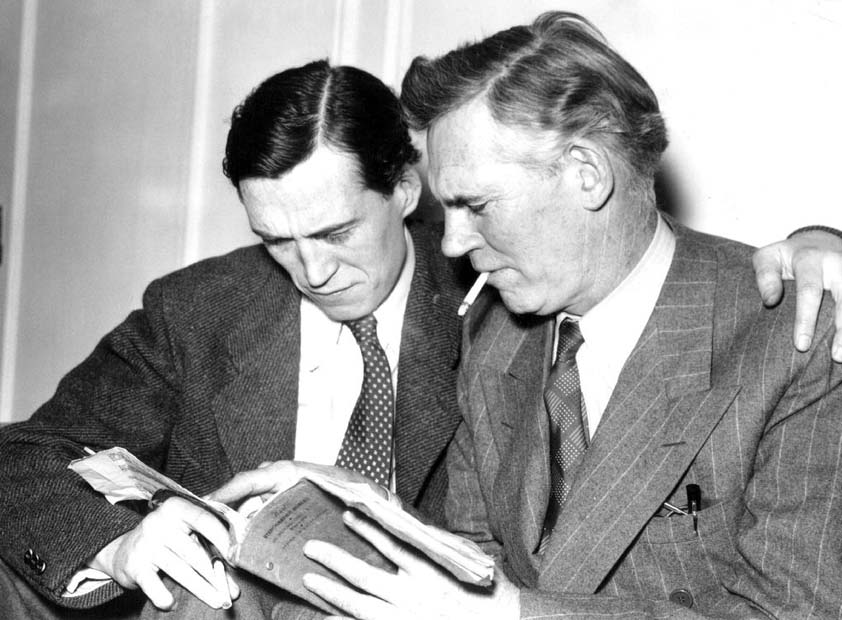

Down Beat magazine, August 8, 1957

I have never really tackled the Quintet's performance of Buddy Collette's Blue Sands in print, mainly because - to me - it comes close to what many people call sacred music. More so than Mahalia Jackson's unquestionably moving spiritual in the film, Chico's appearance possesses a quality that transcends both genre and time. Deeply influential upon me too was the visual impact to the impeccably dressed quintet -which also featured at the time Collette's protege Eric Dolphy on flute and Italian-American guitarist John(ny) Pisano. To find out years later that the performance was filmed in front of an empty venue after the festival had completed for the evening due to a technical issue with the shoot made the power of the music all that more miraculous. Add to this his contributions to one of my other favorite films of all time (and something that I need to devote some more virtual ink to very soon), 1957's Sweet Smell of Success, and…well…almost needless to say, I am more than a little saddened to read of his passing in spite of his living a long, rich life.

Rest in Peace, Chico.

Tuesday, November 5, 2013

Deux Hommes Dans Manhattan (1959)


Released in France in October of 1959, Deux Hommes Dans Manhattan was director Jean-Pierre Melville's fifth feature film. A life-long Americanophile, the movie was one of only two that Melville shot in the United States. 


Cinema scholars and historians don't usually place Melville alongside the directors of what is now known as the French New Wave. Stylistically and thematically he was never entirely in sync with Godard, et. al. and he was several years older than many of the marquee names of that generation. That said, he was a mentor and inspiration to many of those film-makers. He also shared their love of American films, although he unashamedly loved big name productions rather than the more obscure favorites of the youngsters he inspired.


Deux Hommes Dans Manhattan treads some interesting ground between the "crime story" films that Melville would spend much of the remainder of his career pursuing and American film noir. The notion of film noir, of course, was something of a French construct in first place, it's moniker having been coined by French film critic Nino Frank in the mid-1940s. Melville's film comes at the end of the noir era and perhaps can be viewed as something of an homage to some of his inspirations that loosely fit stylistically into that genre.


There are also elements of what many consider French New Wave in the film: the film's pace and its moral ambiguity come immediately to mind. Interestingly enough, the location shots show this side of the film most explicitly, perhaps due to budget constraints and Melville's preferences when the camera was actually in his hand. New York is beautifully filmed and mostly done so at night, something very few American directors had done successfully up until that point. That said, the film sits very comfortably alongside - if not in between - Alexander Mackendrick's Sweet Smell of Success (1957) and John Cassavetes Shadows (1957-1959). I mention the former for its shared DNA of probing the somewhat sordid layer that exists just beneath the surface of Gotham society. The latter has the same feel of guerrilla film-making at times, although Melville's work shows no signs of improvisation.


All 3 films also share a driving jazz soundtrack, which by 1959 had become a signifier of sorts and almost requisite if one wanted to make a gritty film about big city living. In the case of Melville's film the bulk of the "jazz score" was provided by pianist Martial Solal making his debut as a film composer. Solal went on to compose the score to Jean-Luc Godard's groundbreaking À bout de souffle (aka Breathless) the year after this film, something he is perhaps best known for in spite of a career spent on the bandstand with some of the top names in French and American jazz. Incidentally, thanks to all of the interiors being shot by Melville in Paris, Solal may be seen briefly in a cameo as the pianist in the Pike Slip Inn scene.


As Deux Hommes Dans Manhattan went unreleased Stateside in 1959, it has been relegated to rep houses and film festivals for years, taking on an almost mythic quality due to its content, subject matter, and place in Melville's own film-making history. It was a box office flop, which seemingly did have some influence on Melville's subsequent career direction. It is a welcome surprise to see it now available on DVD and Blu-Ray from the Cohen Media Group (no relation to the contemporary American fraternal film-makers). Fans of noir, new wave, or just the crime jazz zeitgeist of the late-1950s will no doubt appreciate it at least one time around, while dyed-in-the-wool Melville fans (such as yours truly) look forward to being view another one of his films repeatedly with a critical eye.

Tuesday, October 15, 2013

Eddie Diehl (2013)

Rarely does much time pass these days, before I find myself mourning the loss of yet another musical hero. We are truly witnessing the end of an era, as the last members of jazz music's great generation set exeunt for their big sleep. It's part of life, for sure, and certainly one of the pitfalls for those of us who admire so much the achievements of the 20th Century. Case in point: as I was sitting down to write this piece, I learned of the death of drummer Donald "Duck" Bailey. There isn't even an obituary posted, as I type these words, for the man who designed the template for modern jazz organ combo drumming and accompanied the master Jimmy Smith for years in clubs and on Blue Note LPs. Another one gone. May he rest in peace.


Donald Bailey (R.I.P.), photo c.1958 by Francis Wolff, Van Gelder Recording, Hackensack, NJ

And yet. And yet, I find myself actively (desperately?) looking these days for living, breathing, and thriving threads that connect back to where much of this begins for me. And in this spirit, I present Eddie Diehl. Who is Eddie Diehl? Well, for me that was just a name on a few random early-'60s Prestige jazz LPs by Brother Jack McDuff, Sonny Stitt, and Gene Ammons. Frankly, I never paid him much mind. I just figured he was another one of the cats like fellow guitarists Thornell Schwartz and Eddie McFadden. Forces to be reckoned with back in the day, for sure, but background voices perhaps somewhat doomed to obscurity, who may or may not have been given the proper respect of an obituary when that bell tolled.


Well, Here It Is... Eddie Diehl with Hank Jones, CD, 2006

But Eddie Diehl is alive and well and living in Poughkeepsie! Well, close enough at least. It turns out Eddie lived quite a storied life. Back when I was making music on the Hammond organ (1996-2007), I spent a lot of time absorbing the lessons to be learned in groves of those Smith Blue Notes and McDuff Prestige sides. But somehow I never quite grasped that Eddie was a regular member of McDuff's working group, arguably the finest jazz organ combo of its day, second only to Jimmy Smith's trio. Yes indeed, Diehl was Grant Green's replacement in late 1961 and stayed with McDuff (as the only white member of the combo, I should add) for nearly two years. His replacement? George Benson. Re-listening to Eddie's contributions to a disc like 1962's Brother Jack Meets The Boss, it is clear that Eddie was heavily influenced by bebop, but a working musician follows the money and Diehl spent much of the 1960s and 1970s working the organ rooms. By the end of the 1960s his discography all but sputtered out. 


Mr. Clean by Jack McDuff and Gene Ammons, January 23, 1962, Eddie Diehl on guitar 

Diehl moved upstate and re-focused his talents on luthiery, something that he now has a tremendous amount of notoriety for. But he never stopped playing. Occasional sessions would come up such as Al Haig's 1983 Manhattan Memories, but it was not until 2006 that Eddie had the opportunity to cut his first disc as a leader. Well, Here It Is gives you some indication of Eddie's self-effacing attitude, but it gives a better indication of what a lyrical, beautiful guitarist he is who obviously has spent more than a little time not only with his Charlie Christian and Charlie Parker records, but also with his George Van Eps books. 


Eddie Diehl by Bart Thrall, 2010

Fortunately, Bart Thrall took it upon himself to film an extended interview with Eddie and share it with us all up on YouTube. Granted, it's not the most professional "movie" and could probably use the guiding hand of a good editor, but it is a soulful little piece that means a lot to those of us who dig hearing stories of what it was like to be on the road with Jack McDuff in the early 1960s. It also adds a lot to the legacy of Diehl and celebrates a living, breathing, and musically vibrant exponent of this music that is all but vanishing before our very eyes. 


Duke Ellington's Prelude To A Kiss performed by Eddie Diehl, 2010


Eddie talks about his 1934 D'Angelico Model A guitar

Monday, September 9, 2013

September Song (1938)


September Song, sheet music, 1938

It is quite easy to see why Kurt Weill and Maxwell Anderson's "September Song" from the 1938 Broadway production Knickerbocker Holiday has been front of mind as of late. While Summer still lingers (particularly for those experiencing Indian Summers), the days truly grow shorter and it is only a matter of weeks before Autumn will begin to show its colors.


Kurt Weill and Fritz Lang in Hollywood, April 1938

German-born Jewish composer Kurt Weill had been living in New York City for 3 years in 1938. His residence in the most American of American cities marked the end of the first phase of his career in which he contributed greatly to the Weimar Republic soundtrack thanks to his rightfully celebrated collaborations with Bertholt Brecht. While in Germany, Weill was not only an active in populist left-wing politics but his music was celebrated the world over by avant-garde modernist composers such as Stravinsky, Berg, and Milhaud. Fleeing the Nazi regime, Weill and his wife settled in New York after short stays in both London and Paris. Weill soon began to self-consciously reshape his music to fit the mold of his adopted country. To show just how far he had come, 1938 saw him not only his collaboration with Anderson premiering on Broadway, but he spent some time in Hollywood scoring a movie for the Austrian-expatriate, Fritz Lang.


Maxwell Anderson, Time, December 10, 1934

Maxwell Anderson was a somewhat odd pairing for Lang. Born in Pennsylvania in 1888, he was twelve years Weill's senior. A scholar and writer, Anderson was also an outspoken pacifist - something that jeopardized his professional career on more than one occasion. Bouncing between writing and teaching jobs from North Dakota to San Francisco, he eventually ended up in New York in 1918 working as a journalist and playwright. Before meeting Weill and working with the composer on Knickerbocker Holiday, Anderson had experienced several Broadway hits. But what was perhaps most interesting about this particular stage production was the sub-text of the play. With the memory of the executions of Sacco and Vanzetti only 11 years old in 1938, Anderson had more than a passing interest in leftist-influenced anarchism. In fact, Knickerbocker Holiday is most often characterized by critics as a thinly veiled attack on then-President Franklin Delano Roosevelt's New Deal, something Anderson felt veered to close to the fascism that was dominating Europe at the time. 


September Song, Walter Huston, Brunswick Records, 1938

One of the stars of Knickerbocker Holiday was 55-year old Walter Huston, who requested a song be written for his character of advanced age to help woo a younger love interest. Weill and Anderson obliged with 'September Song' reportedly written start-to-finish within the span of a day. With it's roots going back at least as far Geoffrey Chaucer's 14th Century 'Canterbury Tales' (see The Merchant's Tale), the symbolic use of months of the year to represent differing ages was certainly nothing new in the late-1930s. But Weill and Anderson managed to breathe some new life into a well-worn device as well as come up with a rather touching plea for love. It's not terribly sentimental, but rather sweet lyrically and the music manages to hint just enough at the inevitability of the protagonist's demise without being morbid. 


John Huston and his father Walter Huston, 1940

Irish-American Huston, the father of maverick film director and actor John Huston, and the grandfather of actors Angelica Huston and Danny Huston, had a minor chart hit with his original 1938 recording of 'September Song'. Huston's version was allegedly President John Kennedy's favorite song, with JFK performing the number for private affairs, intoning Huston's croon. Whether or not Jack was aware of the politic undercurrents of the song's source it not something that is documented. In addition to their other post-1938 achievements, all of the principals eventually found varying degrees of success in Hollywood: Huston won an Academy Award in 1948 for his supporting role in The Treasure of the Sierra Madre; Anderson wrote the screenplay to Alfred Hitchcock's The Wrong Man in 1956; and Weill scored a select few films. When Kurt Weill died in 1950, Maxwell Anderson delivered the eulogy. At the time of Weill's death 'September Song' experienced a resurgence of popularity, thanks in no small part to its use in that year's September Affair motion picture and by the end of the decade it was firmly established as a standard in what is now called the Great American Songbook.

Further reading: follow this link for a more musical look at the song.

Further listening: give this great 1946 version a listen by pianist/vibraharpist Dardanelle featuring Joe Sinacore on guitar which makes for an interesting comparison to Teddy Wilson's 1944 version featuring Sarah Vaughan on vocals, Remo Palmieri on guitar, and Charlie Ventura on tenor saxophone.

Monday, August 5, 2013

The Tune is Red (1960)


The Tune is Red, oil on canvas, Hassel Smith, 1960 (full painting) 

I have often been asked why I like 20th Century abstract art. The phrasing of the questions have ranged from speculation on whether or not the questioner's child or grandchild could have easily done the same thing to something along the lines of I just don't get it. In truth, I cannot simply explain my attraction to abstract art both of and influenced by this period, so I thought I would muse on that notion a bit. 

My first art appreciation course was not until my second or third semester of college here in San Francisco. It was a fairly pedestrian course, one which covered all of the hits and a handful of misses. As a side note: I recall the end of term project that I created for this class: a piece of assemblage, which I white-washed with tempura paint, so I was already showing my colors so to speak. By this time, I had already been exposed to a few minor abstract works via 12-inch LP covers, having got hip to jazz records in high school. Another influence, no doubt, was psychedelic art of the 1960s, something that I spent no meager amount of time digging deep into during my high school and college years. The sum total was that abstract works just captured my interest and imagination more than any other form of visual art - save perhaps architecture and design. So I did which I so often do when something piques my interest, I dug deeper and deeper until I found the good stuff. 


The Tune is Red, oil on canvas, Hassel Smith, 1960 (detail 1)

Of course, no exploration of abstract art tunnels too far away from the New York School of the 1940s and 1950s, but living here in San Francisco, I am fortunate to have access to many of the fruits of the Bay Area School from roughly the same time period. Between the local works and visit to the Guggenheim and MOMA on East Coast trips, I have managed to see a fairly broad survey of modernist art from the last Century. I have my favorites, such as Franz Kline, but it's always exciting to be exposed to an exhibition such as the recent Richard Diebenkorn exhibit that I mentioned a few weeks ago.


The Tune is Red, oil on canvas, Hassel Smith, 1960 (detail 2) 

Back to the question of why. From an intellectual point of view, I have come to the opinion that figurative painting - for the most part - became less and less relevant as media such as photography, film, and video gained more and more traction. Surely the skill of the great masters is something to still admire, but I think it is important to note that those paintings are often the only visual records of those times. As the means to visually document the world around us have become more and more accessible and prevalent, it seems only natural to me that and older medium such as painting be used in a different manner. Of course that I have long been interested in some many other aspects of post-World War II culture certainly has resulted in a certain predisposition. Most certainly. But I think this has been a case where bias has been a virtue, in that I don't seem to have the aversion to this style of art that a lot of people exhibit.


The Tune is Red, oil on canvas, Hassel Smith, 1960 (detail 3) 

From a emotional point of view, I find abstract art captivating on a many levels - particularly when I am able to see a painting in person. In the works that have captivated me most, I have typically found a depth - in the colors, in the textures, in the movement - that just stimulates something in my brain and emotions. I don't look at them as Rorschach tests. I've ceased to look at them for meaning. But rather I have come to just experience them for what they are. And, yes, a good abstract painting can be similar in some ways to a good jazz performance in that it is a mix of skilled tradition and personal improvisation. So as my life as a jazz musician has been become more and more important, perhaps my affinity to abstract art and abstract expressionism in particular has achieved parallel importance.

Note: the painting featured on this page is currently residing at the Cantor Arts Center on the Stanford University campus. Admission is free, so all you need to do it get your self there to see this one. The artist, Hassel Smith, is one of the many of that era whose love for jazz music was reflected in his work. Smith spent a significant amount of time in the San Francisco-Bay Area and was also an important early part of the Ferus Gallery scene in Los Angeles. His remarkable timeline can be found here.

Tuesday, July 16, 2013

Walk, Don't Run! (1954)


In a Sentimental Mood, Johnny Smith, Roost LP 424, 1954, photo/design by Burt Goldblatt

A few days shy of his 91st birthday, master guitarist Johnny Smith died on June 12, 2013 in Colorado Springs, Colorado. He was born in Birmingham, Alabama in 1922 and made his fame (if not his fortune) in New York City during the 1940s and 1950s. In spite of well-publicized endorsements of namesake guitars made by both Gibson and Guild, he died something of an obscure figure as far as the general public is concerned. But he was a true musician's musician and remains an absolute legend among guitarists. Not surprisingly, nearly every online obituary gives prominence to Smith's biggest claim to popular fame: Walk, Don't Run! Written and recorded by Smith in 1954, the song was taken to number 2 in the pop charts in 1960 by The Ventures from Tacoma, Washington giving them their first hit and launching their long career. But as one might expect, there is a little more to the story.


The New Moon at The Imperial Theater, New York, advertising postcard, 1929

Sigmund Romberg and Oscar Hammerstein wrote the music and words (respectively) to the 1929 operetta New Moon. Two of the songs written were later to become jazz standards: Lover, Come Back to Me and Softly, As in a Morning Sunrise. The former was immediately the more popular tune with 3 recordings charting in 1929 alone. The latter had to wait a full decade before seeing any success, thanks to Artie Shaw's 1938 revival of the song. On the jazz scene, the tune really got legs in the 1950s - for example the Modern Jazz Quartet featured it as a regular part of their repertoire as early as 1952. Arguably, Sonny Rollins recorded the definitive version of the song in 1957 at the Village Vanguard for Blue Note Records during the peak of the song's popularity among modern jazz musicians. But, as usual, I digress.


Johnny Smith Quintet featuring Stan Getz, Royal Roost 78 1152, 1952

Johnny Smith was well aware of the song in the early 1950s. By day he earning a living as a staff musician at NBC in New York City and by night he was often leading his own combos in jazz clubs such as Birdland. Smith was to later claim that he came to appreciate songs such as Softly... due to his day job, were he was often called upon to back light-opera and pop singers. A few items from these singers repertoire worked themselves into Johnny's own massive library of songs and due to an association with Teddy Reig's Roost Records that began in 1952 and lasted until 1960, thanks in no part to his initial hit record of Moonlight in Vermont featuring Stan Getz.


Johnny Smith, circa 1954, photo by William "PoPsie" Randolf

Smith had over half a dozen sessions for Roost under his belt by the time he entered the recording studio in late September 1954. The additional musicians on the session consisted of guitarist Perry Lopez, who had backed Smith before and whose other most well known sessions were conducted earlier in the month with Julius Watkins for Blue Note Records and the following March with Benny Goodman at Basin Street; bassist Arnold Fishkind, who was in between his long association with Lennie Tristano and his second act as a studio musician; and Don Lamond, most famous at that time for his drumming with Woody Herman's orchestra. All had recorded with Smith previously and Lopez in particular had a certainly level of musical empathy that only comes from playing together. One of the songs the bandleader brought to the session was a contrafact he had written over the chord changes of Softly, As in a Morning Sunrise. In jazz-speak, a contrafact is new melody line played over a standard set of chords, although these are often re-harmonized. This practice was particularly popular during the 1940s and 1950s as modern jazz was pushing the boundaries of tradition. A fringe benefit for record label owners is that they did not need to pay publishing royalties on the source material. Smith's line on Softly... was transposed up a whole step from the original and titled Opus by the composer. The title didn't stick as producer and label boss renamed it Walk, Don't Run! by the time it was released on Roost's 10-inch LP disc, In a Sentimental Mood, later that same year.


Walk, Don't Run!, Johnny Smith, 1954

Unlike Moonlight in Vermont, Walk, Don't Run! was neither a critical nor popular success for Johnny. But as mentioned, Smith was a musician's musician and his 1950s releases were ardently admired by guitarists everywhere. One avowed fan was the ultimate Tennessee guitar picker: Chet Atkins. Atkins own recording career for RCA Victor was well underway by the time he got his hands on Smith's '54 Roost release. And due to his A&R position with his record label, by the mid-1950s he was making regular business trips to New York City where he check out Johnny Smith if he was gigging. One such night Atkins approached Smith at the bar at Birdland and asked Johnny's permission to record one his tunes. The story goes that Chet insisted on playing his arrangement for Johnny on the spot and if there was ever a fly-on-the-wall moment of choice for guitar geeks, this certainly has to be a top contender.


Walk, Don't Run, Chet Atkins, 1957

The Chet Atkins recording of Walk, Don't Run (note the dropped exclamation point) was released in October 1957 on RCA Victor LP Hi-Fi in Focus. How this release fits within the context of Chet's full discography is not for this entry to tackle, but it is interesting to take note of the LP sleeve. Although very much a countrypolitan recording that the record buying public had come to expect from Atkins, RCA Victor obviously aimed this particular disc at the burgeoning HiFi market. The music (and recording artist for that matter) is given only a paragraph's worth of ink on back cover, while the remainder of the 12-inches is given to the details of the RCA Victor/Canon Camera album contest. The winning image by A.M Baunach of Bethlehem, Pennsylvania is a great exercise in modernist photography, predating a the strikingly similar John Whitney/Saul Bass collaboration on the title sequence for Alfred Hitchcock's Vertigo by nearly 9 months. From where did Baunach draw his inspiration? I fear this is lost to the ages, for Baunach (later known as Barney and who had a long career as a corporate photographer for the Bethlehem Steel Corporation) passed away in 1991 and this will most likely remain a footnote.


Hi-Fi in Focus, Chet Atkins, RCA Victor LPM-1577, 1957, cover photo by A.M. Baunach

What is known, is that guitarist Bob Bogle was hip to the Atkins disc and the song entered the repertoire of the nascent Ventures, who began plying their instrumental trade throughout the Pacific Northwest in 1958. As guitarist, writer, and fellow guitar geek Deke Dickerson explained to the Washington Post's Matt Schudel in this interview, the success of Walk-Don't Run and The Ventures signaled a very significant shift in popular music prefiguring the California surf music, Pacific-Northwest frat rock, and British beat group phenomenas of the 1960s. But theirs is a story that has been much better tackled elsewhere than here on these pages.


Walk-Don't Run, The Ventures, Blue Horizon 45 101-1, 1959

By the time The Ventures were hitting the charts with his song, Johnny Smith had left New York for Colorado to raise his daughter after the death of his wife. He occasionally returned to the East Coast for recording sessions and live appearances, but increasingly he spent more time focused on his family, his music store, and mentoring a younger generation of guitarists. When the royalty checks started appearing for Walk, Don't Run! he was unaware of The Ventures and their success. But it turned out to be a fortunate turn of events that would help Johnny through some of the leaner times in his life. The few words on this page only begin to hint at how important Smith was to 20th Century American guitar playing. He has been called everything from the "greatest plectrum guitarist" to "America's own Django". His humility was almost as legendary as his technical facility on the fretboard. His strong, but articulate opinions on everything from guitar-making to amplifier electronics both challenged and inspired some of the greatest musical instrument companies in the United States. He will be missed, not only by those who were fortunate to know him during his lifetime, but by those like myself who have simply known him through his music. May he rest in peace.

Further reading: I highly recommend this excellent interview that fellow jazz guitarist Bart Stringham conducted with Smith on the topic. Many of the details of this saga were drawn from this particular interview. The more musicianly-minded (and you gearheads) are well advised to check out Chip Stern's  in-depth homage here.