Showing posts with label Hard Bop. Show all posts

Wednesday, November 19, 2014

Reid Miles (1956)


Patterns in Jazz by Gil Melle, Blue Note 12" LP 1517, 1956, cover design by Reid Miles

I know. I can hear it now. The last thing the internet needs is another blog post singing the praises of Reid Miles and his 12-year stint (1955 through 1967) as the principle LP artwork designer for Blue Note Records! Right? Well, of course one cannot laud Miles enough: his work for the New York jazz label was a masterful high-water mark of mid-century modernist design. But there was certainly more to  this well-known figure whose full story has remained remarkably illusive.


Mobley's Message by Hank Mobley, Prestige 12" LP 7061, 1956, cover design by Reid Miles

Born in Chicago on the 4th of July in 1927, Miles actually grew up on the West Coast of California. After the stock market crash of '29, his family moved out west as so many other families did during the Great Depression and ended up in Long Beach. A marital split left Miles in the care of his mother who supported he and his younger sister by working in a cannery in San Pedro. Most of his youth is undocumented, although it is known that Miles joined the U.S. Navy near the end of the Second World War, serving as a chauffeur. Upon his discharge he returned to Los Angeles and, according to Wayne Adams who would later assist Miles in the 1980s, chased after a girl and wound up enrolled in the Chouinard Art Institute. Chouinard was then located in MacArthur Park and would merge with the LA Conservatory of Music to form CalArts in 1961. Other Chouinard alumni, whose names will be familiar to regular readers of this blog, include graphic designer S. Neil Fujita and pop artist Ed Ruscha. Rushca and Miles almost certainly never crossed paths that the school as the former did not enroll until the mid-1950s. However, it is very likely that Fujita and Miles met at Chouinard as both attended the school around the same time - a very interesting idea considering how Fujita would later find him on the East Coast designing LP covers for Columbia Records a few years after studying in LA.


Herbie Nichols Trio by Herbie Nichols, Blue Note 12" LP 1519, 1956, cover design by Reid Miles

The person at Chouinard with whom Miles most definitely came into contact was the eventual head of the basic design program, Bill Moore. Moore is something of a West Coast design/art/animation legend who influenced generations of students over the course of nearly 40 years at Chouinard and CalArts. He is the thread the ties together such disparate names as Reid Miles, Ed Ruscha, Tim Burton, and Brad Bird - all of whom studied with Moore. Miles apparently had very little influences in his design life, but Moore was one of them and an early one at that.


Olio by Thad Jones, Prestige 12" LP 7084, 1956, cover design by Reid Miles

Leaving Chouinard before completing the courses required for graduation, Reid Miles made a bee line for New York City, scoring a job with designer John Hermansader. The timing was certainly right as Hermansader, through his friend and fellow designer Paul Bacon, began working with Blue Note Records in 1953 not too long after Miles arrived on the scene. Here is where the story gets a little hazy. While it is known that Miles worked on the Blue Note account, it is not known how much of the early (1953-1955) work was done by Hermansader, how much was done by Miles, and how much was a collaboration. May we indulge in some speculation? Based on the collective body of work Hermansader provided for Blue Note, he quite feasibly could have been another big influence on Miles.
Blue Note historians tend to downplay Hermansader's contributions, but his other surviving examples of visual art clearly indicate a notable talent. The raw materials are there in the work which Miles would develop into an art by the end of the decade, but the question remains just how much input Miles had into the Blue Note designs early on. Unfortunately, neither man is alive today to discuss and the period is poorly documented. At any rate, Miles - who would develop a history of transience - left Hermansader in 1955 for a job with Esquire magazine doing the layout and paste-up work. However, whatever his contributions were to Hermansader's Blue Note account, they were significant enough to catch the attention of the label's owners Alfred Lion and Francis Wolff who asked him to take a lead role in the design of 12-inch Long Playing records, the format that by mid-decade had emerged as the preferred format of most jazz releases industry-wide. Esquire was apparently well-aware of this arrangement and allowed Miles to moonlight - which usually meant working on 3 or so Blue Note LP covers on his Saturday off from the magazine, being paid $50 a job/cover. Later interviews would reveal Miles to be would could be termed a workaholic, in that to him his work was his life and the absence of former made the latter unbearable at times.


J.R. Monterose, Blue Note 12" LP 1536, 1956, cover design by Reid Miles

Contributing to an even more hazy story is the fact that a year after this transition and for a time space of nearly 2 years, Miles was also contributing 12" LP jacket designs to Blue Note's de facto, if not friendly rival Prestige Records. From 1956 until 1957, his name graced the jackets of nearly a dozen discs. Interestingly, this work is seldom cited by design aficionados, although there are some excellent covers that easily rival his contemporaneous work for Blue Note. There are definitely some similarities between the covers and one can see his style developing which each subsequent release. So here is one artist, simultaneously providing the visuals for some of the important modern jazz music recorded of its time (or any time for that matter). And, of course, Miles was famously not a fan of jazz, preferring classical. But this period is interesting, mainly as it is of such high quality and yet overlooked by most design fans.


Quadrama by the Gil Melle Quartet, Prestige 12" LP 7097, 1956, cover design by Reid Miles

A third influence should be mentioned at this time. After Moore and possibly Hermansader, Miles other major influence of the time was known to be Saul Bass. Bass needs no significant introduction to readers of this weblog, but it is perhaps helpful to put him into historical perspective. At the time that Miles was accepting a job with Esquire and getting down to business in earnest with Blue Note and Prestige, Bass was gaining widespread notoriety first for his work on the posters and titles for Carmen Jones (1954) and even more so for The Man With The Golden Arm (1955). His greatest innovation was perhaps the liberation of type from the galley, finding new ways to communicate the written word that flew (sometimes, literally) in the face of convention. Of course, in the design world Bass is a true legend and this history books have been kind to the legacy he has left behind.


6 Pieces of Silver by the Horace Silver Quintet, Blue Note 12" LP 1539, 1956, cover design by Reid Miles

Reid Miles perhaps enjoyed his most lucrative years well after his run with Blue Note. Some time in the early-1960s he started focusing on photography. By mid-decade it was his main focus. Miles returned to Los Angeles in 1971 and within a few years established a style and clientele that made him quite successful by anyone's terms - although he retained a drive and passion for his work which lasted until his death in 1993. Miles occasionally returned to album covers during the second act of his career, but his style by then had changed so significantly that few people made the connection. Fortunately, his mid-'50s experiments are well documented and, hopefully, well preserved for the ages.

Tuesday, October 15, 2013

Eddie Diehl (2013)

Rarely does much time pass these days, before I find myself mourning the loss of yet another musical hero. We are truly witnessing the end of an era, as the last members of jazz music's great generation set exeunt for their big sleep. It's part of life, for sure, and certainly one of the pitfalls for those of us who admire so much the achievements of the 20th Century. Case in point: as I was sitting down to write this piece, I learned of the death of drummer Donald "Duck" Bailey. There isn't even an obituary posted, as I type these words, for the man who designed the template for modern jazz organ combo drumming and accompanied the master Jimmy Smith for years in clubs and on Blue Note LPs. Another one gone. May he rest in peace.


Donald Bailey (R.I.P.), photo c.1958 by Francis Wolff, Van Gelder Recording, Hackensack, NJ

And yet. And yet, I find myself actively (desperately?) looking these days for living, breathing, and thriving threads that connect back to where much of this begins for me. And in this spirit, I present Eddie Diehl. Who is Eddie Diehl? Well, for me that was just a name on a few random early-'60s Prestige jazz LPs by Brother Jack McDuff, Sonny Stitt, and Gene Ammons. Frankly, I never paid him much mind. I just figured he was another one of the cats like fellow guitarists Thornell Schwartz and Eddie McFadden. Forces to be reckoned with back in the day, for sure, but background voices perhaps somewhat doomed to obscurity, who may or may not have been given the proper respect of an obituary when that bell tolled.


Well, Here It Is... Eddie Diehl with Hank Jones, CD, 2006

But Eddie Diehl is alive and well and living in Poughkeepsie! Well, close enough at least. It turns out Eddie lived quite a storied life. Back when I was making music on the Hammond organ (1996-2007), I spent a lot of time absorbing the lessons to be learned in groves of those Smith Blue Notes and McDuff Prestige sides. But somehow I never quite grasped that Eddie was a regular member of McDuff's working group, arguably the finest jazz organ combo of its day, second only to Jimmy Smith's trio. Yes indeed, Diehl was Grant Green's replacement in late 1961 and stayed with McDuff (as the only white member of the combo, I should add) for nearly two years. His replacement? George Benson. Re-listening to Eddie's contributions to a disc like 1962's Brother Jack Meets The Boss, it is clear that Eddie was heavily influenced by bebop, but a working musician follows the money and Diehl spent much of the 1960s and 1970s working the organ rooms. By the end of the 1960s his discography all but sputtered out. 


Mr. Clean by Jack McDuff and Gene Ammons, January 23, 1962, Eddie Diehl on guitar 

Diehl moved upstate and re-focused his talents on luthiery, something that he now has a tremendous amount of notoriety for. But he never stopped playing. Occasional sessions would come up such as Al Haig's 1983 Manhattan Memories, but it was not until 2006 that Eddie had the opportunity to cut his first disc as a leader. Well, Here It Is gives you some indication of Eddie's self-effacing attitude, but it gives a better indication of what a lyrical, beautiful guitarist he is who obviously has spent more than a little time not only with his Charlie Christian and Charlie Parker records, but also with his George Van Eps books. 


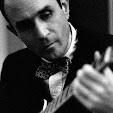
Eddie Diehl by Bart Thrall, 2010

Fortunately, Bart Thrall took it upon himself to film an extended interview with Eddie and share it with us all up on YouTube. Granted, it's not the most professional "movie" and could probably use the guiding hand of a good editor, but it is a soulful little piece that means a lot to those of us who dig hearing stories of what it was like to be on the road with Jack McDuff in the early 1960s. It also adds a lot to the legacy of Diehl and celebrates a living, breathing, and musically vibrant exponent of this music that is all but vanishing before our very eyes. 


Duke Ellington's Prelude To A Kiss performed by Eddie Diehl, 2010


Eddie talks about his 1934 D'Angelico Model A guitar

Tuesday, February 19, 2013

Bags & Trane (1978)

I think it's high-time for another guest weblog from that stalwart of natural shoulder style, 'Talk Ivy'Jimmy Frost Mellor, don't you? Well then, take it away, Jimmy...


Bags & Trane, Milt Jackson & John Coltrane, Atlantic 1368, released 1961 (recorded 1959), cover photo by Lee Friedlander

19 years after his conception in New York City and 17 years after his birth, I first encountered a new friend. One that I've had by my elbow for the last 35 years now. Some records are just records, but this one was an instant Mate.

It was 1978 and I was 13, kicking my heels a long way from home and keeping myself busy by giving myself an education sorting through two bookcases filled with old vinyl: my Uncle's record collection, the treasure trove that was to change my life in every respect.

I'd already fallen in love with Hard Bop drumming and images of American Ivy League clothes from those LP sleeves at least two-days ago at this point and was by now very happily hooked on both, creating a daily routine for myself of listening to as much as I could, reading all the sleeve notes and checking out all the visual clues I could get of the style of the genius musicians I'd suddenly stumbled across by accident. I still have my old notebook diaries of tracks, dates and an ever growing series of shopping lists.

I couldn't separate the music from the clothes and from the style of their presentation on those old LP sleeves back then. They were a total sensory experience combining skills from many disciplines all brought together to produce perfect artworks to me. The music, the clothes, the styling, the photography, the typography, the sleeve notes , the smell of the cardboard, the texture of the paper liner, the weight of the thick black vinyl inside.

I tried to talk to my Uncle about all this and he just nodded. "Gesamtkunstwerk", he replied. "Bless you", I said and fetched him a handkerchief...

I'm writing this with my late Uncle's copy of Bags and Trane (Atlantic, 1961) in front of me and it is still a perfect thing to me. A part of the soundtrack of my last 35 years and one of the milestones which marked the start of my real life, after my previous 13 years of moving slowly towards who I was meant to be.

So who was I meant to be? With this LP and others I could tell you about another time I felt I'd found a home at last. A stylish place with nice neighbours who you never minded if they made a noise because the noises they made were so good.

And there were also new clothes to go with it all too! Different clothes. Familiar/Unfamiliar items which captured my imagination just as much as the brilliance of the pairing of Bags and Trane themselves.

I've described what I was up to as me giving myself an education back then, so what did I learn?

1) I needed a haircut ASAP. Something cropped and serious, but a world away from anything 'Skinhead'. My floppy 'Huge Grant' (Did he even have hair like that back then?) style had to go.

2) There can be a hardness in softness/ Checking out the cover shot on the LP the shirt collars and jacket shoulder lines were soft, unstructured and relaxed. But from two of the most disciplined musicians I'd heard so far? Trane especially came across to me as really tough, or maybe that's just what I wanted to project on to him? I liked the idea of 'sloppy' clothes (By regimented English standards) and a razor sharp creative brain at work. I liked the contrast. Later I was to learn that that was actually a very commonplace combination, but what did I know at 13? Before I went to live with my Uncle I only knew City of London Accountants and those in the Legal trade who were all as uniformed as the little lead soldiers in my toy fort.

3) A shirt, a tie and a suit needn't be a shirt, a tie and a suit ! These Ivy League clothes can be wonderfully subversive. Not to most Americans, I agree - who consider them Conservative - but their Conservatism is nothing compared to that of the English... I just fell in love with the idea that a haircut, a shave, a suit, and a shirt and tie could be done on the sly so that it all looked straight from a distance but was really saying something else. That seemed to reflect a part of me that went very deep: to be myself and to get away with it!

And so I went shopping for my first Blue buttondown and slim Dark knitted tie...a story for another day!

- Jimmy Frost Mellor


Thursday, February 7, 2013

Donald Byrd (1932-2013)


Donald Byrd, New York City, 1959, photograph by William Claxton

Rest in Peace Professor Byrd

Click here for an alternate shot of the above photo