Tuesday, February 11, 2014

Coming Attractions (2014)

Word on the street confirms that the new documentary in the works about legendary English haberdasher and style-setter John Simons will be out in the Spring. Here's the trailer:
If you simply cannot wait, pop over to the shop (virtually). Not only is their Winter sale still on, but there are a lot of new items available, including some very nice chinos cut in Brooklyn by Hertling for John & Co. as profiled by Fitzgerald's Closet last week.


Print ad, Bass Weejuns, 1951

Why John? Did you watch the trailer? Still not convinced? Well. The world has not always been as small as it is. There was a time, not very long ago, when the look was still a secret society of sorts - but one in which a pair of Bass Weejuns performed the function of a signet ring. John's string of shops were not only the source of so much of the good stuff but they were also a meeting place for the likeminded. Plus they served as an inspiration for Statesiders like yours truly to dig deeper into what is now termed heritage clothing. I still remember the first time I walked into his shop in Covent Garden. I experienced an epiphany of sorts and I very much credit John Simons bringing a lot of what I was thinking around classic, American style into focus.

Keep your eye on Garmsville for updates about the documentary.

Tuesday, January 28, 2014

Forcillo Archtop Guitar (1953)


Forcillo archtop guitar, New Jersey, circa 1953

This week, I am going to indulge myself even more than usual. The guitar featured in this entry was recently sold on a well-known auction site with very little pomp and even less circumstance. It is a Forcillo Guitar. If that means nothing to you, even if you are a guitar geek like this writer, don't worry. The name Forcillo, as in Frank Forcillo, is one that lingers in a netherworld of footnotes and asides. That said, the few facts that we do know about Forcillo are interesting enough to make it worth documenting here, at least until what is left of the story is rescued from obscurity.

Here is what we do know. In 1932, first generation Italian-American guitar, violin, and mandolin maker John D'Angelico started his own shop in the Little Italy neighborhood of New York City. He had apprenticed under his Uncle, Raphael Ciani, for over a dozen years before Ciani's death. When he opened his own shop among his employees were Jimmy DeSerio, who stayed with D'Angelico until 1959, and Frank Forcillo whose tenure with the legend was a brief few years.

Frank Forcillo's name next turns up in the Blue Book of Guitars as the head of United Guitars out of Elizabeth, New Jersey, started presumably some time in the 1940s. The next concrete piece of info around Forcillo is courtesy of the United States Patent Office. On April 29, 1948, Forcillo filed a patent listed as an Attachment for Fretted, Stringed Instruments. This design is topped of by a finial that is remarkably similar to the same detail that D'Angelico used almost exclusively during the same time period. Could it be that this was, in truth, a Forcillo design that dated back to the Frank's time in John's shop?
Update: luthier Todd Cambio of Fraulini Guitars has confirmed that the finial on the headstock is a very old Neapolitan design used not only by instrument makers in Italy long before mid-century, but also used by John D'Angelico's uncle, Sr. Ciani, on several mandolins and guitars. 


United States Patent 2,510,775 filed by Frank Forcillo, 1948

1948 was also the year that Gibson, who had recently emerged from the industrial chaos of World War II as the guitar industry leader, introduced a 2-pickup version of their ES-350 guitar. This guitar was the first mass-produced 2-pickup cutaway guitar created solely for use as an electric instrument and re-set the standard for what an electric guitar was. Gibson's one-time biggest rival, the Manhattan-based Epiphone, introduced a competing but ultimately unsuccessful model within a year. B League champs Gretsch over in Brooklyn introduced their similarly-styled Electro II by 1951 and by decade's end parlayed the configuration into several fairly successful models.

At this point of time (or very close to it at least) the Forcillo Guitar enters into the picture. An educated guess would put this particular guitar in right around this time period. Some of the details in addition to the aforementioned finial include Waverly open-back tuners and matching tailpiece, as well as a headstock shape and neck design that is very similar to contemporaneous D'Angelicos. The pickups are something of a mystery. Perhaps they are manufactured by Franz/Fransch/Fransche, another small New York are shop that provided pickups most notably for Guild guitars while that guitar-maker was in New York and later New Jersey.

Beyond the above, very little is currently known about Forcillo and United and even less than the instrument. The seller shared that it was purchased by his father in New York some time around 1953 and continued to use it for years in jazz and society bands. There was some vague memory of it being a fairly expensive purchase at the time, but the other details are long lost. Of course I would love to hear from anyone who knows more about any of these topics. Please use the comments section below or email me direct. I will update this post as I discover and verify more information.

Footnote: both D'Angelico and Guild continued to have connections to Forcillo's United Guitars throughout the 1950s. When John D'Angelico finally caved into pressure to make "electric" guitars he chose not to make the bodies, but rather purchased laminate-top bodies from Forcillo's United company. John would then make the neck and complete the guitars - again using Franz pickups for the most part. Obviously they remained on good terms. According to Hans Moust's excellent and highly recommended The Guild Guitar Book, in the early years Guild used craftsmen from Code Guitars in New Jersey to finish their instruments. Many references to United Guitars make reference to Code in the same breath. The connection has yet to be fully explained but it is worth mentioning here. It should also be noted that the finish on this Forcillo guitar looks very similar to the finishes Guild used during it's first year or so (1953-1954).


Forcillo archtop guitar, New Jersey, circa 1953

Wednesday, January 22, 2014

Nicholas Ray (1932)

A full two decades before film director Nicholas Ray was in his celluloid ascent - reaching a peak with 1955's Rebel Without a Cause - and long before Jean-Luc Godard declared that Ray indeed was cinema, the latter-day legend was just embarking on an artistic journey that eventually would lead him to the modern medium of film. This journey had some unlikely twists and turns, not the least of which was a year spent as an apprentice to famed architect Frank Lloyd Wright.


James Dean and Nicholas Ray, Los Angeles, California, 1955

Ray, later known as Nick to most of his West Coast friends and acquaintances, was born on August 7, 1911 in Galesville, Wisconsin with the given name of Raymond Nicholas Kienzle. 3 months earlier in Spring Green, 100 miles southwest of Ray's birthplace, the maestro Frank Lloyd Wright began work on his own personal residence and workplace. This came to be known as Taliesin, a Welsh word which in rough translation means shining brow and refers to Wright placing the structure on the top or brow of a hill. Wright was in transition, having recently returned from nearly a year in Europe which had marked the end of what was later called his Prairie Period.

Frank Lloyd Wright, 1930, around the time he first met Ray, photo by Price Studios

As a youth, Ray was an uneven student seemingly distracted by the big city delights of Chicago, where he spent much of his formative years. He returned to Wisconsin for his senior year in high school and showed a strong affinity for and ability in public speaking, English, and drama. Two years in a state college was followed by a tumultuous semester at the University of Chicago in the fall of 1931, after which he left for New York City to study theater. However the connections made in Chicago precipitated Ray joining the inaugural fellowship of Frank Lloyd Wright at Taliesin in 1932, some time after the two crossed paths again during an event at Columbia University.

Design Sketch, Capital Journal Building, Salem, Oregon by Frank Lloyd Wright, 1931-1932

Contrary to many claims and by his own account, Ray spent a year under Wright's tutelage. The concept of the Fellowship was that Wright felt only by living and working with apprentices around the clock could the understand his concepts and ideas. As a social experiment, it was quite interesting. Members of the Fellowship not only actively executed ideas on Taliesin itself (the buildings there in a state of constant change), but worked as draughtsmen, farmhands, and domestics on the property. Living was for the most part communal. One suspects that the strict rigors of life at Taliesin did not sit well with the restless Ray, but many have commented that a political rift between Wright, a strong believer in the power of democracy, and his more radical-leaning protege was the cause of the latter's return to New York, which would eventually lead him to Hollywood and the world of film-making.

Nicholas Ray, Hollywood, c.1945

However, the year spent with Frank Lloyd Wright would prove to have a tremendous impact on the artistic eye of Nicholas Ray. 34 years after his death, Ray's widow Susan stressed the importance of the period in an interview, citing the nature of the Fellowship as shaping Ray's ideal work methods, as well as the very idea that architecture (and film in Ray's) provided a framework for the arts. Ray himself professed that his love of what he called the vertical line was due to his time with Wright and attributed his fondness for Cinescope to an extension of that love.

Storyboard, Rebel Without a Cause, Nicholas Ray, 1955

An interesting footnote: the 2003 DVD release of Ray's masterful In a Lonely Place, made for Humphrey Bogart's Santana Productions, features a short film extra in which director Curtis Hanson sings Ray's praises and calls out some of the architectural elements in the film - citing the Frank Lloyd Wright period. Hanson, of course, directed 1997's L.A. Confidential a neo-noir film based on James Ellroy's novel. One of the buildings prominently featured in the film is the Lovell House designed around 1927 by Richard Neutra. Neutra had only recently moved the United States and one of his first employers before moving to California was Frank Lloyd Wright. The Lovell House is just 2 miles down the hill from the Griffith Park Observatory which is perhaps the most well-know location used in Ray's Rebel Without a Cause.

Tuesday, November 26, 2013

Chico Hamilton (1921-2013)


Blue Sands by The Chico Hamilton Quintet from Bert Stern's Jazz on a Summer's Day, 1958

Social media delivered the news that Forestorn "Chico" Hamilton passed away at the age of 92. The words legend and great are far too often abused these days, but Hamilton was both. As an innovative percussionist and bandleader, he was a somewhat singular modern American musician. I know people that have both studied and worked with him, so I can comfortably claim that he was also a true personality. For those interested in digging deep, I highly recommend listening to and reading his contribution to the Smithsonian Jazz Oral History Project here.

Print ad, Down Beat magazine, 1962

Regular readers will no doubt be well aware of my love of (and possible obsession with) Bert Stern's 1958 film Jazz on a Summer's Day. It has managed to work it's way onto these pages several times, but most notably here and here. Bassist Bill Crow also was kind enough to answer some of my related questions here.


Down Beat magazine, August 8, 1957

I have never really tackled the Quintet's performance of Buddy Collette's Blue Sands in print, mainly because - to me - it comes close to what many people call sacred music. More so than Mahalia Jackson's unquestionably moving spiritual in the film, Chico's appearance possesses a quality that transcends both genre and time. Deeply influential upon me too was the visual impact to the impeccably dressed quintet -which also featured at the time Collette's protege Eric Dolphy on flute and Italian-American guitarist John(ny) Pisano. To find out years later that the performance was filmed in front of an empty venue after the festival had completed for the evening due to a technical issue with the shoot made the power of the music all that more miraculous. Add to this his contributions to one of my other favorite films of all time (and something that I need to devote some more virtual ink to very soon), 1957's Sweet Smell of Success, and…well…almost needless to say, I am more than a little saddened to read of his passing in spite of his living a long, rich life.

Rest in Peace, Chico.

Tuesday, November 5, 2013

Deux Hommes Dans Manhattan (1959)


Released in France in October of 1959, Deux Hommes Dans Manhattan was director Jean-Pierre Melville's fifth feature film. A life-long Americanophile, the movie was one of only two that Melville shot in the United States. 


Cinema scholars and historians don't usually place Melville alongside the directors of what is now known as the French New Wave. Stylistically and thematically he was never entirely in sync with Godard, et. al. and he was several years older than many of the marquee names of that generation. That said, he was a mentor and inspiration to many of those film-makers. He also shared their love of American films, although he unashamedly loved big name productions rather than the more obscure favorites of the youngsters he inspired.


Deux Hommes Dans Manhattan treads some interesting ground between the "crime story" films that Melville would spend much of the remainder of his career pursuing and American film noir. The notion of film noir, of course, was something of a French construct in first place, it's moniker having been coined by French film critic Nino Frank in the mid-1940s. Melville's film comes at the end of the noir era and perhaps can be viewed as something of an homage to some of his inspirations that loosely fit stylistically into that genre.


There are also elements of what many consider French New Wave in the film: the film's pace and its moral ambiguity come immediately to mind. Interestingly enough, the location shots show this side of the film most explicitly, perhaps due to budget constraints and Melville's preferences when the camera was actually in his hand. New York is beautifully filmed and mostly done so at night, something very few American directors had done successfully up until that point. That said, the film sits very comfortably alongside - if not in between - Alexander Mackendrick's Sweet Smell of Success (1957) and John Cassavetes Shadows (1957-1959). I mention the former for its shared DNA of probing the somewhat sordid layer that exists just beneath the surface of Gotham society. The latter has the same feel of guerrilla film-making at times, although Melville's work shows no signs of improvisation.


All 3 films also share a driving jazz soundtrack, which by 1959 had become a signifier of sorts and almost requisite if one wanted to make a gritty film about big city living. In the case of Melville's film the bulk of the "jazz score" was provided by pianist Martial Solal making his debut as a film composer. Solal went on to compose the score to Jean-Luc Godard's groundbreaking À bout de souffle (aka Breathless) the year after this film, something he is perhaps best known for in spite of a career spent on the bandstand with some of the top names in French and American jazz. Incidentally, thanks to all of the interiors being shot by Melville in Paris, Solal may be seen briefly in a cameo as the pianist in the Pike Slip Inn scene.


As Deux Hommes Dans Manhattan went unreleased Stateside in 1959, it has been relegated to rep houses and film festivals for years, taking on an almost mythic quality due to its content, subject matter, and place in Melville's own film-making history. It was a box office flop, which seemingly did have some influence on Melville's subsequent career direction. It is a welcome surprise to see it now available on DVD and Blu-Ray from the Cohen Media Group (no relation to the contemporary American fraternal film-makers). Fans of noir, new wave, or just the crime jazz zeitgeist of the late-1950s will no doubt appreciate it at least one time around, while dyed-in-the-wool Melville fans (such as yours truly) look forward to being view another one of his films repeatedly with a critical eye.

Tuesday, October 29, 2013

René Gruau for McGregor Sportswear (1954)

At the beginning of the summer, mention was made of USA-based McGregor Sportswear's introduction of the continental style into its product line. As I promised some further details on the matter, let's take another look now. 


McGregor Sportswear print ad, 1955, illustration by René Gruau

McGregor's roots reach back to New York, 1921 and Scottish immigrant David Doniger's establishment of a men's clothier. Doniger introduced the McGregor brand 2 years later and by mid-century was arguably the most well-known purveyor of what was be known as casual wear. Doniger was obviously just ahead of the curve. The concept of casual clothing did not really exist (much) before  the end of the Second World War. But with the wartime economy boom the reached through much of the 1940s and the cultural shift towards suburban pursuits, McGregor was positioned to take full advantage of the situation. 


McGregor Sportswear print ad, 1948, illustrator unknown


By the mid-1950s, the brand was firmly established but began to feel the heat of competition as regional favorites such as Pendleton began to utilize the quickly-maturing advertising industry to increase its nationwide presence. McGregor had always specialized in imports as much of its early offerings were truly from Scotland, but to keep pace it looked even further afield to Italy and the en vogue continental look. In 1954, what would be called continental style was most commonly referred to as Italian style and McGregor referenced the latter liberally in its advertisements for its new line of distinctly international and modern casual wear. 


McGregor Sportswear print ad, 1954, illustrator unknown


McGregor Sportswear print ad, 1954, illustration by René Gruau


To help sell this new look to a fairly staid and traditional market, McGregor (or most likely McGregor's advertising agency who I suspect, but cannot yet prove, was Y&R at the time) enlisted the services of one of the most talented fashion illustrators of the day, René Gruau. Italian-born Gruau, whose birth name was Renato Zavagli Ricciardelli delle Caminate, was 45 at the time his first print adverstisements for McGregor were published. He had only been living in New York for 9 years, having immigrated from Paris where he gained notoriety and no small amount of fame for his work with nearly every single important fashion magazine up until that time. A cursory look at his early work lends strong credence to the notion that his style completely changed the art of fashion illustration. And it certainly had a lasting impact on McGregor's approach to advertising. Gone were the flat, cartoon-like figures used early on (and still used by the competition at the time) to be replaced by impressionistic verging on abstract figures of intriguing looking gentlemen wearing garments with strange cuts and details. The Gruau commission was short-lived and only was run in magazines for a couple of years, but subsequent McGregor print ads unmistakably bore his influence. Mad Men could not have provided a better storyline!


McGregor Sportswear print ad, 1955, illustration by René Gruau


McGregor Sportswear print ad, 1956, illustration by René Gruau


McGregor Sportswear print ad, 1956, illustration by René Gruau


Post-Gruau era McGregor Sportswear print ad, 1962, illustrator unknown

Tuesday, October 15, 2013

Eddie Diehl (2013)

Rarely does much time pass these days, before I find myself mourning the loss of yet another musical hero. We are truly witnessing the end of an era, as the last members of jazz music's great generation set exeunt for their big sleep. It's part of life, for sure, and certainly one of the pitfalls for those of us who admire so much the achievements of the 20th Century. Case in point: as I was sitting down to write this piece, I learned of the death of drummer Donald "Duck" Bailey. There isn't even an obituary posted, as I type these words, for the man who designed the template for modern jazz organ combo drumming and accompanied the master Jimmy Smith for years in clubs and on Blue Note LPs. Another one gone. May he rest in peace.


Donald Bailey (R.I.P.), photo c.1958 by Francis Wolff, Van Gelder Recording, Hackensack, NJ

And yet. And yet, I find myself actively (desperately?) looking these days for living, breathing, and thriving threads that connect back to where much of this begins for me. And in this spirit, I present Eddie Diehl. Who is Eddie Diehl? Well, for me that was just a name on a few random early-'60s Prestige jazz LPs by Brother Jack McDuff, Sonny Stitt, and Gene Ammons. Frankly, I never paid him much mind. I just figured he was another one of the cats like fellow guitarists Thornell Schwartz and Eddie McFadden. Forces to be reckoned with back in the day, for sure, but background voices perhaps somewhat doomed to obscurity, who may or may not have been given the proper respect of an obituary when that bell tolled.


Well, Here It Is... Eddie Diehl with Hank Jones, CD, 2006

But Eddie Diehl is alive and well and living in Poughkeepsie! Well, close enough at least. It turns out Eddie lived quite a storied life. Back when I was making music on the Hammond organ (1996-2007), I spent a lot of time absorbing the lessons to be learned in groves of those Smith Blue Notes and McDuff Prestige sides. But somehow I never quite grasped that Eddie was a regular member of McDuff's working group, arguably the finest jazz organ combo of its day, second only to Jimmy Smith's trio. Yes indeed, Diehl was Grant Green's replacement in late 1961 and stayed with McDuff (as the only white member of the combo, I should add) for nearly two years. His replacement? George Benson. Re-listening to Eddie's contributions to a disc like 1962's Brother Jack Meets The Boss, it is clear that Eddie was heavily influenced by bebop, but a working musician follows the money and Diehl spent much of the 1960s and 1970s working the organ rooms. By the end of the 1960s his discography all but sputtered out. 


Mr. Clean by Jack McDuff and Gene Ammons, January 23, 1962, Eddie Diehl on guitar 

Diehl moved upstate and re-focused his talents on luthiery, something that he now has a tremendous amount of notoriety for. But he never stopped playing. Occasional sessions would come up such as Al Haig's 1983 Manhattan Memories, but it was not until 2006 that Eddie had the opportunity to cut his first disc as a leader. Well, Here It Is gives you some indication of Eddie's self-effacing attitude, but it gives a better indication of what a lyrical, beautiful guitarist he is who obviously has spent more than a little time not only with his Charlie Christian and Charlie Parker records, but also with his George Van Eps books. 


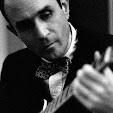
Eddie Diehl by Bart Thrall, 2010

Fortunately, Bart Thrall took it upon himself to film an extended interview with Eddie and share it with us all up on YouTube. Granted, it's not the most professional "movie" and could probably use the guiding hand of a good editor, but it is a soulful little piece that means a lot to those of us who dig hearing stories of what it was like to be on the road with Jack McDuff in the early 1960s. It also adds a lot to the legacy of Diehl and celebrates a living, breathing, and musically vibrant exponent of this music that is all but vanishing before our very eyes. 


Duke Ellington's Prelude To A Kiss performed by Eddie Diehl, 2010


Eddie talks about his 1934 D'Angelico Model A guitar