Showing posts with label Frank Lloyd Wright. Show all posts

Thursday, November 13, 2014

Tuesday, May 6, 2014

TK Smith (2014)


Desert Oasis: The Midcentury Modern Guitars of TK Smith by Nick Rossi, photos by Jacqueline Di Milia, courtesy of the Fretboard Journal

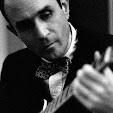
Issue number 32 of the Fretboard Journal is now available at newsstands everywhere. I am very pleased to announce that it includes an article penned by yours truly profiling guitarist and guitar-maker TK Smith. I first heard about TK in 1990 when Big Sandy & The Fly-Rite Trio released their debut LP on Dionysus Records and played in San Francisco to support the disc. I've been a fan of Smith's playing ever since. The path his life has taken is a very interesting one and it intersects with a lot of the topics covered on the pages of this weblog. I find his work to be beautiful, not only from the aesthetic perspective of someone who appreciates modernism, but also as someone who respects true craftsmanship. I also like that TK is part of a Southern California tradition - not in a convoluted way, but simple because he is both creative and curious. Plus he has great taste!

Fretboard Journal 32, Ry Cooder cover story, out now

TK Smith may be found online and you may also follow him on Instagram. And here's just a snippet of why he is one of the most interesting guitar players around…

Wednesday, January 22, 2014

Nicholas Ray (1932)

A full two decades before film director Nicholas Ray was in his celluloid ascent - reaching a peak with 1955's Rebel Without a Cause - and long before Jean-Luc Godard declared that Ray indeed was cinema, the latter-day legend was just embarking on an artistic journey that eventually would lead him to the modern medium of film. This journey had some unlikely twists and turns, not the least of which was a year spent as an apprentice to famed architect Frank Lloyd Wright.


James Dean and Nicholas Ray, Los Angeles, California, 1955

Ray, later known as Nick to most of his West Coast friends and acquaintances, was born on August 7, 1911 in Galesville, Wisconsin with the given name of Raymond Nicholas Kienzle. 3 months earlier in Spring Green, 100 miles southwest of Ray's birthplace, the maestro Frank Lloyd Wright began work on his own personal residence and workplace. This came to be known as Taliesin, a Welsh word which in rough translation means shining brow and refers to Wright placing the structure on the top or brow of a hill. Wright was in transition, having recently returned from nearly a year in Europe which had marked the end of what was later called his Prairie Period.

Frank Lloyd Wright, 1930, around the time he first met Ray, photo by Price Studios

As a youth, Ray was an uneven student seemingly distracted by the big city delights of Chicago, where he spent much of his formative years. He returned to Wisconsin for his senior year in high school and showed a strong affinity for and ability in public speaking, English, and drama. Two years in a state college was followed by a tumultuous semester at the University of Chicago in the fall of 1931, after which he left for New York City to study theater. However the connections made in Chicago precipitated Ray joining the inaugural fellowship of Frank Lloyd Wright at Taliesin in 1932, some time after the two crossed paths again during an event at Columbia University.

Design Sketch, Capital Journal Building, Salem, Oregon by Frank Lloyd Wright, 1931-1932

Contrary to many claims and by his own account, Ray spent a year under Wright's tutelage. The concept of the Fellowship was that Wright felt only by living and working with apprentices around the clock could the understand his concepts and ideas. As a social experiment, it was quite interesting. Members of the Fellowship not only actively executed ideas on Taliesin itself (the buildings there in a state of constant change), but worked as draughtsmen, farmhands, and domestics on the property. Living was for the most part communal. One suspects that the strict rigors of life at Taliesin did not sit well with the restless Ray, but many have commented that a political rift between Wright, a strong believer in the power of democracy, and his more radical-leaning protege was the cause of the latter's return to New York, which would eventually lead him to Hollywood and the world of film-making.

Nicholas Ray, Hollywood, c.1945

However, the year spent with Frank Lloyd Wright would prove to have a tremendous impact on the artistic eye of Nicholas Ray. 34 years after his death, Ray's widow Susan stressed the importance of the period in an interview, citing the nature of the Fellowship as shaping Ray's ideal work methods, as well as the very idea that architecture (and film in Ray's) provided a framework for the arts. Ray himself professed that his love of what he called the vertical line was due to his time with Wright and attributed his fondness for Cinescope to an extension of that love.

Storyboard, Rebel Without a Cause, Nicholas Ray, 1955

An interesting footnote: the 2003 DVD release of Ray's masterful In a Lonely Place, made for Humphrey Bogart's Santana Productions, features a short film extra in which director Curtis Hanson sings Ray's praises and calls out some of the architectural elements in the film - citing the Frank Lloyd Wright period. Hanson, of course, directed 1997's L.A. Confidential a neo-noir film based on James Ellroy's novel. One of the buildings prominently featured in the film is the Lovell House designed around 1927 by Richard Neutra. Neutra had only recently moved the United States and one of his first employers before moving to California was Frank Lloyd Wright. The Lovell House is just 2 miles down the hill from the Griffith Park Observatory which is perhaps the most well-know location used in Ray's Rebel Without a Cause.

Saturday, April 13, 2013

The Great Gatsby (1945)

The Great Gatsby, F. Scott Fitzgerald, 1925, first edition, cover by Francis Cugat * (see note below)

88 years ago, on April 10, 1925, Charles Schribner's Sons first published F. Scott Fitzgerald's The Great Gatsby. The novel was met with mixed critical reaction upon it's release and only moderate popular success. In fact, the first edition sold a mere 24,000 copies over the course of it's initial run. By the time Fitzgerald died on December 21, 1944 at the age of 44, the book had been out of print for several years.

F. Scott Fitzgerald, 1937, photo by Carl Van Vechten

Eight years prior, a second-year Harvard undergrad by the name of James Laughlin published the first New Directions anthology. The roll call of authors New Directions published in the subsequent few years is astounding, particularly as many were being introduced to the general public for the first time: Tennessee Williams, Lawrence Ferlinghetti, William Saroyan, Wallace Stevens, to name just four. In addition to spotlighting then-contemporary modernist literature, New Directions began reprinting many authors (such as Henry James and Evelyn Waugh) whose works had never been re-printed after their initial publishing runs had ended. 


The Wisdom of the Heart, Henry Miller, 1941, jacket by Alvin Lustig

Part of the spirit of New Directions was reflected in its strikingly modern dust jackets. In 1940, Laughlin was introduced to graphic artist, designer, and ex-Frank Lloyd Wright acolyte Alvin Lustig by bookseller and literary scene-maker Jacob Zeitlin in Lustig's Brentwood, California studio. Laughlin later said that he only needed to spend an hour with the artist before he knew he was in the presence of what he called "authentic creative genius". A commission for the jacket of the New Directions 1941 editions of Henry Miller's The Wisdom of the Heart and Carl Rakosi's Selected Poems soon followed. But while these works reflected the style Lustig had developed up until that time: his next series of work for New Directions, twenty-five books in the publisher's New Classics series, came to represent an iconic style for which Lustig (and to a lesser extent New Directions) is most well-known.

Alvin Lustig, 1945

Among the titles in the New Classics series was Fitzgerald's The Great Gatsby, which was published for only the second time in 1945. A new wave of book reviews followed in the wake of the release. This time around Fitzgerald's novel was being reconsidered, not as the period piece it had been regarded as for the most part over the prior twenty years, but rather as something important and perhaps great. To the point, the New Classics edition marked the beginning of The Great Gatsby as being a true classic of modern American fiction.

The Great Gatsby, F. Scott Fitzgerald, New Classics 9 / New Directions 1945 edition, jacket by Alvin Lustig

Momentum continued on both scholarly and popular fronts through the end of the decade. Somewhat ironically, Paramount Pictures in Hollywood began a film adaptation production in 1948 directed by Elliott Nugent and starring Alan Ladd which was released in July of 1949. The irony lies in the fact that Fitzgerald spent his last booze-soaked years in Los Angeles trying to eek out a living writing for films. This first film adaptation drew from both the original novel as well as Owen Davis's 1926 short-lived adaptation for the Broadway stage. Incidentally, the screenwriters were Cyril Hume and Richard Maibaum, the latter being the very same Richard Maibaum who wrote the screenplays of the majority of James Bond films from 1962-1989. In the academic world, at least two books were published in 1951 concerning themselves with Fitzgerald's life and importance. This opened the floodgates to several scholarly works at the highest levels of academia, the sum total of which set The Great Gatsby on the pedestal upon which it still rests today.

Alan Ladd, 1948 Paramount Pictures promotional photo

For further reading, I highly recommend this excellent 1960 New York Times piece.

* An entire weblog entry could be devoted to Francis Cugat's somewhat controversial cover art for the original 1925 edition. Here is what purports to be the untouched original painting, although I cannot vouch for its authenticity. Fitzgerald (perhaps influenced by Ernest Hemingway) later claimed he hated the cover and went to great lengths to apologize for it. And yes, Cugat was the brother of the famous New York-based bandleader who popularized the rhumba: Xavier Cugat. 

Tuesday, July 31, 2012

Alvin Lustig for JBL (1950)


Alvin Lustig, 1949

In a previous weblog entry, I quoted Charles Eames in saying "Eventually, everything connects." The concept is a favorite of mine and if you are a regular reader here, you will have seen that I often have been able to weave my various interests into the some sort of over-arching narrative. Today's entry is no exception, but designer Alvin Lustig makes such pursuits easy. Over the course of his brief 40 years on this planet, he was involved with books, magazines, interiors, architecture, furniture, industrial design, and company branding/identity. Born in Denver, Colorado he spent much of his early career in Los Angeles (with the exception of a brief spell as a student of Frank Lloyd Wright at Taliesin) before moving to New York City at age 29 to work as the Director of Visual Research for Look magazine, then in its ascension. A year later he began teaching. By the end of 1946 he returned to Los Angeles and opened up his own studio where he tried to eek out a living until he was forced to move back to New York in 1951. As a result of diabetes, Lustig lost his sight in 1954 and he died a year later due to complications around that disease.

Jim Lansing Signature Speakers brochure by Alvin Lustig, 1950 (front)

One of Lustig's clients during his second tenure in Los Angeles was the fledgling James B. Lansing Sound. The story of legendary amplified sound pioneer James Bullough Lansing (born James Martini, making him a suspected Italian-American. Cough.) is rather complicated, but in short he began to manufacture loudspeaker in LA in 1927 as the Lansing Manufacturing Company. After his business partner was killed in a plan crash, Lansing's company floundered was was purchased by Altec in 1941. Lansing was contracted with the company through 1946, but parted ways before that contract expired. James B. Lansing Sound, Inc. was founded in 1946, although Lansing again struggled to keep the company afloat and took his own life on his ranch in San Marcos, California just north of San Diego in the Autumn of 1949. Control of the company reverted to Vice President Bill Thomas who was able to parlay the company's sound innovations into a successful business. The company changed it's brand name to JBL in 1955 to settle its ongoing disputes with Altec Lansing. Fast forward fifty-seven years later and the name JBL is known the world-over.


Jim Lansing Model 375 label detail, early-1950s

As part of this chaotic transition, Thomas and James Lansing Sound, Inc. engaged Lustig to assist them with re-branding their company. Unfortunately, there is very little documented information about when Lustig was contracted for the work, but one may assume that it may very well have happened after Lansing's death. Similarly, little is known about the depth of his engagement and how much it increased in scope after his association. What is known, is that by mid-1950 Lustig had overhauled the company's brand identity. That year's brochure was a beautiful example of postwar California modernist graphic design and is a unique item in Lustig's portfolio. It also introduced a logo hallmark (the "Jim Lansing" sans serif font contrasted with the "L" script) that would grace most of Lansing's speakers through the 1955. 


Jim Lansing D-175 speaker driver decal detail, early-1950s


Jim Lansing by Ampex logo variation, early-1950s

In additional to the graphic design work, Lustig's scope of services included design consulting with their speaker enclosures, namely the C34 through C39 series. Again, details are illusive in terms of his exact contributions and the Internet is teeming with vintage-JBL enthusiasts who are more than happy to share their knowledge and educated guesses. But after taking one look at the speaker enclosures from this time period, it is easy to speculate about Lustig's input.


JBL C39 Harlan speaker enclosure, 1956

Lustig's association with the soon-to-be-JBL was obviously brief. The company introduced very little to  it's branding until the mid-1950s transition and Lustig's move to New York, followed by his death meant that there was little future for the partnership. What he did do is very successfully transition the branding of the company to something very cutting-edge and modern: a graphic representation of the products the company was becoming known for. By mid-decade, JBL was being mentioned in Life magazine and the rest, as it's been said, is history.


Jim Lansing Signature Speakers brochure by Alvin Lustig, 1950 (rear)

Tuesday, June 5, 2012

Rooty Toot Toot (1951)

UPA logo, Alvin Lustig, 1950

Among the cartoon cognoscenti, UPA is a legend. Formed in 1944, United Productions of America developed very quickly into THE postwar progressive animation studio. It reached its zenith within a few short years of its existence and almost as quickly it dissipated due to internal conflicts and external pressures. Regardless, it left a legacy which continues to heavily influence animators as it has since the early-1950s. Its long and storied history has been well documented online, this link as well as this one being two good places to start for some of the details.


John Hubley, c.1950

One can make a rather strong argument that the heart and soul of early UPA was John Hubley. Having paid his dues over at Disney over the course of 10 years, Hubley left after the labor disputes of 1941. While at Disney he worked mainly on backgrounds, perhaps most notably (for the purposes of this particular weblog) on the animation of Igor Stravinsky's "The Rite of Spring" (1913) for the Fantasia feature length film in 1940. Not only did this segment receive the approval of the composer himself who visited the animators studio during production, but it also represented some of the most avant grade work that Disney's animators produced - certainly up until that time. Setting aside the fact that Disney and Stokowski took GREAT liberties with the piece, it is a remarkable achievement - not to mention my first exposure to Stravinsky.


The Rite of Spring, Directed by Bill Roberts & Paul Satterfield, Fantasia, 1940

Another visitor to the Disney studios was architect Frank Lloyd Wright in 1939. In a move that is not at all surprising, the maestro brought along a 1934 film by Russian/Soviet animator Ivan Ivanov-Vano that he felt the Disney talent should be aware of. The Tale of Czar Durondai would be very influential indeed, especially on Hubley and another progressive animator with pro-union and genuine communist interests, David Hilberman. Sadly, the aforementioned film seems MIA online, but here is Ivanov-Vano's 1933 Black and White which gives you an indication of his animation style at the time.


Black and White, Directed by Ivan Ivanov-Vano, 1933

After the Disney strike of '41 and the studio's subsequent settlement with the Screen Cartoonists Guild, Hilberman was one of the first to leave Walt's behemoth. Along with several other like-minded Disney refugees he started Industrial Film & Poster Service in 1943. With the Second World War not yet over and the Soviet Union still an ally their progressive politics, hopeful ideals, and attendance at US Communist Party meetings was not yet considered "anti-American". In fact by the time Hudley joined the organization and it was renamed United Productions of America in 1944, much of its work was for US Government-sponsored animated shorts (propaganda by any other name). However this ground to a halt at the conclusion of the war, when the most famous Red Scare in American history started seeping into the political and social landscape. In short, Hilberman was "named" (by Disney, no less) which successfully ended UPA's lucrative government work and forced them into the theatrical animation business.

The forced move resulted in some of the most innovative animation to date as well as some of the most influential animation every created. Their success was not only critical, but popular as well, receiving academy awards for both 1949's "The Ragtime Bear" (featuring Hubley's most well-known creation, a caricature of a McCarthy-ite named Mr. Magoo) as well as 1950's "Gerald McBoing-Boing" (based on a story by Dr. Seuss).


The Ragtime Bear, Directed by John Hubley, 1949


Gerald McBoing-Boing, Directed by Robert Cannon, 1950

1951's "Rooty Toot Toot" was an even further visual and musical innovation. Visually, the animated short's closest kin were the contemporaneous album covers drawn by David Stone Martin for Mercury and Clef Records. The music (by noted bandleader Phil Moore) was a mix of jazz, blues, and modern classical and took the advances of the Stravinsky Fantasia segment a step further and firmly into the post-war mid-century world. The voices include the legendary Thurl Ravenscroft and Annette Warren. While the latter also served as a singing stand-in for both Lucille Ball and Ava Gardner around this time, the former's voice is well known to anyone that has every been to Disneyland, watched and old Kellogg's Corn Flakes commercial (that features Tony The Tiger, that is), or has sung-along with 1966's "Your a Mean One, Mr. Grinch". On top of it all, the subject matter is very adult and quite serious - albeit handled in a playful manner only possible through animation. It's a retelling of the 19th Century Frankie and Johnny folk legend, popularized by everyone from Mississippi John Hurt to Sam Cooke. The short was again nominated for an Oscar, but failed to repeat the success of its predecessors.


UPA logo, Alvin Lustig, 1947

"Rooty Toot Toot" was a visual reflection of much of what UPA was about at the time. Alvin Lustig had designed UPA's initial 1940s logo as well as their 1950 re-branding which is now instantly recognizable and somewhat iconic. Both designs represent the modernist aesthetic at its finest. John Lautner, the father of Googie Architecture and a student of Frank Lloyd Wright, designed the UPA Burbank studio in 1949 around the same time he designed West Hollywood's landmark Googie's coffee shop. And there was a strong contingent of modern jazz fans among the UPA ranks, Hubley in particular. Chico Hamilton reportedly even contributed to a later episode of Gerald McBoing-Boing. Even in subject matter, the cartoon reflected something of the egalitarian atmosphere cultivated by the principals of UPA, with no small degree of ambiguous morality.

Here, without further ado, is the film in question...


Rooty Toot Toot, Directed by John Hubley, 1951

Unfortunately, UPA crumbled soon after the release of the above short. Hilberman had left early on for NYC, his own firm and mostly advertising shorts before briefly leaving the country and then settling in the San Francisco-Bay Area where he taught at San Francisco State University for a number of years. The increasingly threatening activities of the House Committee on Un-American Actitivies forced many either out of the business or at least temporarily out of Hollywood. Hubley was summoned and refused to name names. By 1952 he was out of UPA, working out of LA for another 3 years, before moving to New York. He continued to work in independent animation until his death in 1977. UPA has continued to operate over the years but is a pale reflection of its former self.

For further reading and insight into some of the ideas behind UPA in its original incarnation, I do recommend this 1980 article on Dave Hilberman. 

In 1983, Walt Disney's nephew, Roy Disney, purchased the Lautner-designed UPA building in Burbank, California. He offered significant financial incentives to the occupants at the time to move out immediately. He then completely razed the building. All that survives of the era in the area is The Smoke House restaurant next door built in 1949 and frequented by the UPAers over the years both for their hamburgers and booze. Next time you are in that part of the world, stop in and raise a glass for Hubley, Hilbermann, and Mr. Magoo. 

Saturday, July 25, 2009

Los Angeles (2009)

Beverly Laurel Motor Hotel (1965)
Designer/architect unknown


Gordon Kaufman
Restored 2008


Frank Lloyd Wright
Currently on the housing market, asking $15 million


Thursday, December 18, 2008

Marin County Civic Center Post Office (1962)

A Frank Lloyd Wright design in Kodachrome thanks to a Shorpy contributor. The full size image is here. Nice. Real nice.