Friday, November 11, 2011

Detour (1945)


Directed by Edgar G. Ulmer
Written by Martin Goldsmith and Martin Mooney
Cinematography by Benjamin H. Kline
Music by Leo Erdody

Full details here and here.

First a commercial. If you have a good, local video rental shop - such as mine, Lost Weekend Video - get out there and see if you can rent a copy of this movie (or any movie for that matter). They need your patronage, your legs need the exercise, and the film is going to be more enjoyable on something other than a computer. Now on to today's feature...

Some time ago, local film critic Mick LaSalle, published his short-list of essential Film Noir titles. More recently, I have been dutifully working my way through the movies I have yet to see. Detour is on that list. Seeing that it was not available at my local and that I didn't want to shill out the cash/waste resources for a copy on the 'Bay (nor has it been featured recently in San Francisco's EXCELLENT Noir City Film Festival), I hit the 'net looking for some options. 

Much to my surprise, the entire film (and a decent print at that) is available for viewing on YouTube. Yes, YouTube home to a million low-res time wasters. I feel as if some corner has been turned. 

All that aside, sit back and get comfortable. Released by PRC in November of 1945, you can enjoy the film right here or click over to the 'Tube if you want a little more control over your screen.


Friday, October 28, 2011

Milton Resnick, David Amram, & Friends (1956)


A few weeks ago, I came across the photo above on someone's Tumblr or Flickr or Friendster page. OK, it wasn't Friendster. After a little research I was able to confirm that it was photographed by James Burke for Life magazine some time in 1956. I say "some time" as I have found that the dates are not always accurate in the Life archives, so although it claims December of that year, let's not etch that in marble. OK? At first glance, there is SO much to just plain dig going on here: jazz musicians, abstract expressionist art, loafers, desert boots, and people just having a good time. I posted this shot on my Facebook wall which illicited some positive comments from like-minded souls the world over. It's just a neat encapsulation of why so many of us continue to dig deep into the past for inspiration. So let's dig a little deeper.


Untitled, Milton Resnick, 1959

The main subject of the photo (at least in terms of the assignment Burke was on for Life) was artist Milton Resnick who can be seen dancing with the brunette in fur and heels to the far right of the photo. Resnick has a fascinating biography and in art historian circles is considered one of the major figures of Abstract Expressionism. Curiously, his posthumous popularity has sagged in recent years and he is seldom mentioned in the same breath as Pollock, de Kooning, or even (my personal favorite) Kline. But he was a big part of the 10th Street scene of the 1950s and 1960s.


E 10th Street by James Burke, 1956

The 10th Street thing was a loose collaborative of artists and galleries located on the Lower East Side on and around East 10th Street in Manhattan. Some, like the Phoenix Gallery, still exist but for the most part they thrived from roughly 1952 to 1962. Live/work space was plentiful and rent was cheap, so many of the more progressive artists of the day gravitated to the locale and provided a significant alternative to the upmarket Midtown galleries. Long before SOMA. Long before Chelsea. Note: I wish I could identify more of the artists in the photo above. In addition to Resnick , the only one I am fairly sure of is Franz Kline (black hair and 'stache). If you recognize others, please leave a comment below!


David Amram, Five Spot Cafe, 1957 by Burt Glinn

Back to the main photo. I am fairly confident that the man blowing the French horn is David Amram. Cast your peepers on the photo above shot a year later at the Five Spot Cafe (which is located just a few blocks South of E 10th in the Bowrey at 5 Cooper Square). Same guy, right? If you ain't hip to Amram, get hip. Not only did he have some serious Beat Generation ties back in the day, but he is still going strong in 2011 performing monthly at the Cornelia Street Cafe in Greenwich Village; a living link to the past. I'm only slightly going out on a limb when I say the remainder of the group performing at Resnick's house party is the Amram-Barrow Quartet. Tenor sax man George Barrow hooked up with Amram in 1955 by way of Charles Mingus. The group was rounded out by Arthur Phipps on bass and Al Harewood on drums. They were regulars at The Five Spot and recorded for Decca Records in 1956 or 1957. Of course, this all makes sense as The Five Spot was a favorite of the 10th Street crowd.


Jazz Studio No. 6, The Eastern Scene, Amram-Barrow Quartet, 1957

One final note of admiration regarding the photo. As I mentioned before, be sure to check out the clothes. It's such a cool mix of Bohemian, Ivy League, and contemporary fashion styles of the time. It's always eye-opening to see real candids from this time period (as opposed to movies or magazine ads, that is) to see how folks really dressed. Only Gerry Mulligan made wearing desert boots while blowing a horn look cooler!

Saturday, October 1, 2011

J.Press Polished Cotton Ivy League Trousers (2011)


Legendary Ivy League haberdasher J.Press (started in 1902 on the Yale University campus - a fuller account of which can be found here) are currently stocking their contemporary equivalent of an obscure but iconic piece of clothing: the Ivy League trouser. It's available in both tan cotton twill and charcoal super 110 worsted wool. How do they shape up? We'll get to that in a moment, but first what the hell is an "Ivy League trouser"?


The notion of putting a cinch or buckle on the back of men's trousers just below the waist was not an Ivy League invention. In fact it goes back at least to the late-1800s as partly evidenced by Levi's Vintage Clothing's recent 1878 reissue (above). It is a detail that crops up every few years in the early 20th Century, but by the end of the Second World War it was a trend that had not been revisited since perhaps the 1930s.


Sometime in the early-1950s, clothes-makers re-introduced the detail as part of the emerging post-war "Ivy League" trend. The above ad is from a 1954 issue of Gentry and is the earliest reference to this detail in the Ivy context I have seen so far (source: Ivy Style blog). Most photographic evidence of the back buckle from this era shows its presence on chinos, so it is especially interesting to see this ad mention both worsteds and flannels.


The back buckle (often referred to these days as a "buckle-back") became so synonymous with Ivy style that "Ivy League trousers" became the generic term for any flat-front, straight-leg trouser with this detail - although it did most often refer to chinos or polished cotton twills. The trend itself lasted almost 10 years. By the early 1960s the trend seems to have gone to the wayside, yet again. If you are interested in a good discussion of the matter, follow this link. Historic side-note: I just recently learned that chinos were also known as "suntans" early on - particularly by WWII and Korean War vets - obviously the moniker did not stick (see the below 1956 illustration for a reference).


But let us return to the present. Back in June 2009, the Ivy Style blog carried this piece on the back buckle. And although it took a couple of years, retailers did pick up on the detail. There are a couple of options out there. NYC's Thoroughstitch has produced a very handsome pair of chinos - unfortunately the initial run is sold out and they've been unable to give me an indication of when it will be re-run. Somewhat surprisingly, Levis brand Dockers is doing a version - although the rise is (not surprisingly) geared towards a more contemporary crowd that doesn't quite seem to know where a man's waist is located. Regardless for the right body shape and weight, this US-made garment could be a good, affordable option.


Which brings us back to the J.Press trousers. They too, are made in the USA - by Martin Greenfield, no less, for Press. Good news indeed. The polished cotton twill is a step-up from the military-style Cramerton cloth chinos of which there are so many good options to choose from these days. Nearly perfect for dressing up without looking like you are adhering to casual Friday conventions. They sit at the true waist - perhaps a little high for some (at first) and with no concession to current mainstream trends, but they look good (and, dare I say right) when paired with a button-down and odd jacket. There are some nice details. The slanted pockets drop about half-an-inch from the 1.5" waist-band, which is a detail typically only seen on some vintage items. The straight-leg width measures 10" at the knee and just over 9" at the cuff, which certainly puts them in the provenance of "classic" if you read books such as these.

Postscript: if you have read this far, might I recommend this link for a little more on the origin of the buckle on khaki chinos.

Saturday, September 10, 2011

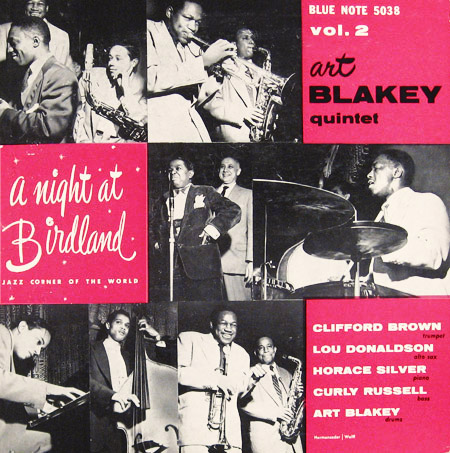
John Hermansader for Blue Note (1953-1955)


Graphic artist John Hermansader provides a direct link between early European modernist thought and a later mid-century icon of American modernism. Hermansader was born in 1916 near Reading, Pennsylvania. 3 years later Walter Gropius founded the Bauhaus in Weimar, Germany. Hermansader, probably in his late-teens or early-20s, went to Memphis to study design (possibly at the Memphis Academy of Arts). The Bauhaus moved to Dessau in 1925 and then to Berlin in 1932 before being closed due to political pressure from the German National Socialist Party. Hermansader continued his design studies at the New Bauhaus in Chicago, which was founded by ex-Bauhaus instructor László Moholy-Nagy in 1937 and existed for just a year before being reopened by Moholy-Nagy as the Chicago School of Design and eventually being incorporated as part of the Illinois Institute of Technology. 


After his studies, Hermansader returned to the East Coast by the end of the 1930s. He established his own design firm in New York City sometime in the 1940s and continued fostering his interest in contemporary jazz music which had reached back for some time. Through his friend and fellow designer Paul Bacon, he was introduced to the fold of the burgeoning Blue Note Records outfit. With the introduction of the 10-inch vinyl LP in 1948 and the accompanying need for sleeve design, Blue Note was faced with the challenge of how to present their catalog of music in a competitive and original manner. The first Blue Note microgroove 10-inch LPs were released in 1951 with striking, extremely modern covers by Bacon. Hermansader contributed his first designs to the "modern jazz series" in 1953 and was associated with the record label for the next 2 years.


Blue Note shifted focus to 12-inch LP releases in 1955. By this time, a young designer named Reid Miles had taken a position with Hermansader's firm as the latter's assistant. While it is quite possible that Miles contributed to some of the 10-inch LP designs credited to Hermansader (a fairly common practice in the design world), he almost certainly had a significant contribution to the first 12-inch LP designs that bore Hermansader's credit. 


With these last designs, Hermansader ended his association with Blue Note and passed the torch to his Miles, who was hired directly by Alfred Lion at the label. Although Hermansader reportedly designed some LP covers for Riverside Records, his work in this field quickly tapered off. By most reports he lived an interesting a full life before passing away at the age of 89 on July 4, 2009.

More, please? Be sure to read my entry on musician and visual artist Gil Melle for more early Blue Note LP images. 

Wednesday, August 31, 2011

Miles Davis and The Ivy League (1954-1958)


Miles, 1956
Photo by Herman Leonard
Blue blazer, grey flannel trousers, and a soft-roll button down striped oxford shirt with a wonderful roll to the collar

After several recent weblog entries and Facebook "conversations" (quotes intentional, I still don't buy into the notion that social media is true conversation as I appreciate the term), I've been doing some research on Miles Davis dalliance with Ivy League style in his clothing choices. Fortunately, it's been somewhat easy to put a timetable to matters. It seems to start "sometime in 1954" according to this article. Yes, I did just cite RL Magazine as a reference, but their source is Charlie Davidson who ran (and still runs) the legendary Andover Shop in Cambridge, Massachusetts. This makes sense. Miles returned to New York City at the very tail end of Winter in early 1954. He was for the first time in at least 4 years clean, having quit heroin cold with the help of his parents in St. Louis. After a quick trip to the West Coast and and extended stay in Chicago to get his chops back in shape, he hit New York hard recording for both Blue Note and Prestige records within weeks of his arrival. It would only stand to reason that Miles was on the hunt for some new threads and maybe even a new identity of sorts. Yes, this is conjecture, but anyone who has dealt with any kind of substance abuse knows well the desire to find some new skin as part of the process. Ivy League style was definitely a known trend by 1954 and obviously appealed to Davis.


Miles, March 1954
Hackensack, New Jersey
Recording for Blue Note Records, photo by Francis Wolff
Note the beef-roll penny loafers a la Sebago; trousers are possibly chinos but could also be gaberdine from the way they are hanging

The end of the stylistic time period is a little more difficult to pinpoint. Part of the challenge is the lack of photographs of Miles 1954-1958. It is well to remember that Davis was far from the icon he is today. Even in terms of popularity he was vying with the likes of Chet Baker and Dizzy Gillespie for much of the decade (although he did top the Down Beat Reader's Poll for trumpet in both 1955 and 1957). All that said, there is definitely more than a couple of photographs that do illustrate his often celebrated association with the style.


Miles, 1956
Underneath the Cafe Bohemia awning, Greenwich Village, NYC
Seersucker sack jacket, a bold gingham or madras shirt, and a ton of cool
For more photos from this night, click here


What is a little more discernible is when Miles moved on. By 1958 the mighty advertising machine of Columbia Records (who signed and recorded Davis in 1955, but did not release his first LP on that label until 1957) was in full swing and the camera shutters were clicking at an impressive speed for a jazz man. Music aside (as it is never 100% about the music), it could be very well argued that Columbia was instrumental in building Miles the man up to the icon status he was by the mid-1960s. At the very least, they certainly were a big help in boosting his profile. But I digress. My point is that by 1959 (or possibly as early as 1958), Miles style begins to show a distinctive, tailored Continental flair. I want to address this in a little more detail in a coming entry, but it is interesting to note that this much-more personalized style is one associated with Davis for nearly the next decade - certainly until the late-1960s. In retrospect, Miles Ivy Style lasted maybe 4 years tops which is remarkably brief considering how often one may see it referenced.


Newport, 1955, by Photo by Herman Leonard
It is not discernible in this photo by Miles is sporting a seersucker blazer, checked button-down club collar shirt, and a University stripe bow tie. And, yes, I am working on a detail shot.


Friday, August 19, 2011

William Holden (1954)

Dig, if you will, this beautiful 1954 color photo of silver screen legend William Holden...


I am sure some of you have seen it before. But take another look. Soak it in. There is a lot of good things going on. First, some background. This was shot during production of Billy Wilder's feature film Sabrina some time in 1954. The film was released in early September, so we can speculate it was Spring or so. Every reference to it says it was shot on Wall Street and the background bears this out. Unfortunately, I've yet to find a photo credit, so please do let me know if any of you out there have this information. A couple of words about Holden's role in Sabrina if you have never seen the movie. In it, Holden portrays a "playboy" type, the younger of two brothers. Interestingly, the film-makers chose not only to equip him with Nash-Healey roadster (also known as "America's first post-war sports car"), but also to outfit him primarily in an Ivy League-styled wardrobe in much of the film and attendant promo stills.


Fortunately, I was able to dig up a couple of other photos from the same shoot. What primarily concerns me here is Holden's clothes. Quintessential American Ivy League Style at Mid-Century! For starters, I would like to enter the first photo as evidence that the sack suit is a boxy, unflattering cut. Depending on the angle this particular example even veers towards slim. Custom suitmaker Jonathan Behr reckons it is a J. Press suit and presents his reasoning here. Regardless of the maker, it's a well cut 3/2 sack with a perhaps a bit more shoulder padding than one might expect - but, hey it's 1954! Zoot Suits were still a recent memory, so we'll go easy on him. Otherwise, all of the requisite Ivy hallmarks are there: button-down soft roll collar shirt, regimental stripe tie, and moccasin (possibly Bass Weejuns, my mind is not 100% on this point yet) loafers. Add to that a nice straw fedora and a TV-fold pocket square, plus just the right amount of color contrast for some élan.


Oh, did I mention the film co-starred Audrey Hepburn? If you can take your peepers off Audrey for a moment or two, be sure to check out some more of those details in Holden's ensemble.

Time Magazine had named William Holden the Top Star of the year in May of '54, so one can only imagine the influence his style had on the American male populace when the film was released in the Autumn.


Side Note A: Now would be a great time to point out that 1954 was also the year the Miles Davis adopted the Ivy League look, at least according to this article. Photographs pretty much bear this out.

Side Note B: As a contrast, Mark Robson's equally fine film Phffft! released just around the same time as Sabrina features Jack Lemmon, in a starring role, trying to shake his square image to show his ex-wife (played by the wonderful and underrated Judy Holliday) that he can be a playboy. His square duds are other great examples of Ivy style, while his "playboy" image includes such frivolities as a striped waistcoat and a mustache! The end result has definite Continental flair, which is a nice historical example of this then emerging style trend. It just so happened 1954 was something of a watershed for that look as well. Read on, if you are interested.

Saturday, August 6, 2011

The Subject is Jazz: Swing (1958)


Produced in New York City by National Educational Television for classroom use and in conjunction with the National Broadcasting Corporation for broadcast. If you had a television in 1957-1958 and were lucky enough to get one of the affiliate stations, this is a sample of what you would see Friday night at 5 PM.

I've been reading series host and pianist Billy Taylor's Smithsonian Jazz oral history transcript available here. Just follow the link and scroll down to Dr. Taylor. There were so many good things about Billy and The Subject is Jazz is just one of them. Check out the clips, read the transcript, and check out some of Taylor's recordings (many of which are available on iTunes).

Side note: this series features the wonderful guitarist Mundell Lowe, a personal favorite and probably one of the last dozen or so living musicians to have played with Charlie Parker.