Friday, August 19, 2011

William Holden (1954)

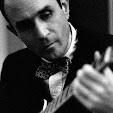
Dig, if you will, this beautiful 1954 color photo of silver screen legend William Holden...


I am sure some of you have seen it before. But take another look. Soak it in. There is a lot of good things going on. First, some background. This was shot during production of Billy Wilder's feature film Sabrina some time in 1954. The film was released in early September, so we can speculate it was Spring or so. Every reference to it says it was shot on Wall Street and the background bears this out. Unfortunately, I've yet to find a photo credit, so please do let me know if any of you out there have this information. A couple of words about Holden's role in Sabrina if you have never seen the movie. In it, Holden portrays a "playboy" type, the younger of two brothers. Interestingly, the film-makers chose not only to equip him with Nash-Healey roadster (also known as "America's first post-war sports car"), but also to outfit him primarily in an Ivy League-styled wardrobe in much of the film and attendant promo stills.


Fortunately, I was able to dig up a couple of other photos from the same shoot. What primarily concerns me here is Holden's clothes. Quintessential American Ivy League Style at Mid-Century! For starters, I would like to enter the first photo as evidence that the sack suit is a boxy, unflattering cut. Depending on the angle this particular example even veers towards slim. Custom suitmaker Jonathan Behr reckons it is a J. Press suit and presents his reasoning here. Regardless of the maker, it's a well cut 3/2 sack with a perhaps a bit more shoulder padding than one might expect - but, hey it's 1954! Zoot Suits were still a recent memory, so we'll go easy on him. Otherwise, all of the requisite Ivy hallmarks are there: button-down soft roll collar shirt, regimental stripe tie, and moccasin (possibly Bass Weejuns, my mind is not 100% on this point yet) loafers. Add to that a nice straw fedora and a TV-fold pocket square, plus just the right amount of color contrast for some élan.


Oh, did I mention the film co-starred Audrey Hepburn? If you can take your peepers off Audrey for a moment or two, be sure to check out some more of those details in Holden's ensemble.

Time Magazine had named William Holden the Top Star of the year in May of '54, so one can only imagine the influence his style had on the American male populace when the film was released in the Autumn.


Side Note A: Now would be a great time to point out that 1954 was also the year the Miles Davis adopted the Ivy League look, at least according to this article. Photographs pretty much bear this out.

Side Note B: As a contrast, Mark Robson's equally fine film Phffft! released just around the same time as Sabrina features Jack Lemmon, in a starring role, trying to shake his square image to show his ex-wife (played by the wonderful and underrated Judy Holliday) that he can be a playboy. His square duds are other great examples of Ivy style, while his "playboy" image includes such frivolities as a striped waistcoat and a mustache! The end result has definite Continental flair, which is a nice historical example of this then emerging style trend. It just so happened 1954 was something of a watershed for that look as well. Read on, if you are interested.

Saturday, August 6, 2011

The Subject is Jazz: Swing (1958)


Produced in New York City by National Educational Television for classroom use and in conjunction with the National Broadcasting Corporation for broadcast. If you had a television in 1957-1958 and were lucky enough to get one of the affiliate stations, this is a sample of what you would see Friday night at 5 PM.

I've been reading series host and pianist Billy Taylor's Smithsonian Jazz oral history transcript available here. Just follow the link and scroll down to Dr. Taylor. There were so many good things about Billy and The Subject is Jazz is just one of them. Check out the clips, read the transcript, and check out some of Taylor's recordings (many of which are available on iTunes).

Side note: this series features the wonderful guitarist Mundell Lowe, a personal favorite and probably one of the last dozen or so living musicians to have played with Charlie Parker.

Friday, July 1, 2011

High Society (1901-1959)

One of the pitfalls of learning about American jazz music of the 20th Century is that it is conducted in retrospection. In looking back, it's often difficult to see, hear, and feel the currents that propels the music forward. Also there is the historian's tendency to look for patterns and once establishing said patterns filing subject matter accordingly. Read enough jazz history books, for example, and one might walk around with the nothing that the Modern Jazz of the 1940s has nothing to do with the original Jazz music as created in New Orleans decades earlier. Of course this was not helped at all by the "modernists" versus the "moldy figs" debate during the bebop era. Hype for sure, but it does belie the American cultural tendency to always be looking for the next big thing, often at the expense of what came before. What I have here is a wonderful musical example something that flies in the face of that kind of thinking. Sit back, read on, and be sure to dig the sound clips.

In 1901, a fellow by the name of Porter Steele composed a song for marching band ensembles titled "High Society". Now at the turn of the last Century marching bands were some of the more popular bands of the day, performing everything from said marches to light classics. They were mainstream and ordinary folks dug them. Fair now. But down in New Orleans, a clarinetist and guitarist by the name of Alphonse Picou was instrumental a developing a new style of music, which later came to be known as jazz. Picou, a contemporary and sometime bandmate of the legendary Buddy Bolden, adopted Steele's "High Society" for this new sort of combo and improvised a clarinet line based on the piccolo part of Steele's composition. Picou was later cited as a big influence by such players as Johnny Dodds and Jimmy Noone and "High Society" might very well be his lasting contribution to music as we shall see. Unfortunately, there is no early recording available featuring this first adaptation.

The first jazz recording of "High Society Rag" (retitled) was on June 22, 1923 by Kid Oliver's Jazz Band. Although recorded in Chicago (for Okeh Records), it featured such NOLA stalwarts as Dodds and Louis Armstrong (cornet). In fact, it is safe to say that it is a fairly authentic recording of classic hot New Orleans jazz...


The arrangement supposedly is fairly close to Picou's adaptation most importantly Dodds clarinet line. In fact, dig the little riff he plays at about 2:17. Go ahead. Go back and listen again. Now the more astute heads among you may already recognize the riff. But let's move forward a few years...

1937 and Benny Goodman is the recently crowned "King of Swing". I am not going to spend my time arguing the validity of this title, but I will say that jazz music was reaching its commercial zenith in terms of mainstream popularity and "Swing" was on the tip of every music journalist's pen. Goodman was an extremely popular bandleader at the time both through live appearances and regular radio broadcasts. To his great credit (and perhaps discrediting American social values of the time), Goodman hired pianist Teddy Wilson in 1935 and thereby was the first significant white bandleader to appear in public with a mixed band. A year later he further challenged the color barrier by hiring Lionel Hampton in the vibraphone. Benny had chops, could swing - plus he had the drumming genius of Gene Krupa. Needless to say, it was a good band. Now dig this clip of Benny and the band in 1937 (introduced by Rudy Vallee!). Be sure to listen closely when Hampton comes in for his solo - about 52 seconds into the clip...


Did you hear it? Yep. "High Society" again. With a little more swing and sounding more than a little more modern. So with that in mind let's move forward another 8 years...

On November 26, 1945, Charlie Parker entered WOR Recording Studios in New York City to record his first session as a leader. It was later issued as Charlie Parker's Reboppers on the indie small group swing and bop specialist label Savoy. His contracted pianist, Bud Powell, was a no-show; he was having trouble with his horn; and his trumpeter (19-year-old Miles Davis) was struggling with the tunes. Any yet he managed to record not 1 but 3 widely acknowledged modern jazz classics on the session, one of which was something of a magnum opus and one of the most explosive examples of modern jazz improvisation captured on disc to that date - and was rarely equaled in the years after. Check out "KoKo" paying particular notice to Bird's alto at about 1:18...


HIGH SOCIETY! Yet again. From jazz to swing to bop. Where could we possibly go from here?

One of he biggest jukebox hits of 1947 was a double-sided modern jazz tenor battle featuring two of the music's more swinging Lester Young disciples. "The Chase" recorded in June by Dexter Gordon & Wardell Gray for Dial Records managed to interpolate the "High Society" riff we have been looking at into the the full melody of the song! Dexter also takes it about as far as anyone could in the opening bars of the his solo (yes, he solos first). It's a beautiful evocation of what Central Avenue in Los Angeles probably sounded like on a good night in the late-40s and a great way to end this post...


OK, not quite. Just to bring it all back home, let's go back to Alphonse Picou with this rare clip of him near the end of his life in 1959 playing - yes, you guessed it - his own solo on "High Society"....


Friday, June 24, 2011

D'Andrea Guitar Plectrum 351 (2011)


Near the end of last year, I was in Gryphon Stringed Instruments in Palo Alto trying to sort out a few spare parts for my recently purchased 1947 Epiphone Broadway guitar. It just so happened that the fellow helping me was luthier Steve Saperstein - something completely unbeknownst to me at the time. I had just recently gone down the rabbit hole of guitar picks and after spending far too much time on the Internet had decided the take the plunge and purchase a very expensive imitation tortoise shell plectrum.

Aren't they all tortoise shell, you ask? Well, interestingly no. Guitarists started using plectrums (similar to what pluck the strings in a harpsichord) some time in the 1800s and one of the early substrates that found favor was actual tortoise shell. But this material was expensive, somewhat fragile and eventually became illegal to use in 1973. At the same time that guitar players started picking the strings with things other than feathers or fingers, what later became known celluloid was first invented in England. In the spirit of the Industrial Age, it was soon being used for every item imaginable and by 1872 was known as celluloid in the USA.

Anyhow back to Palo Alto last year. Being somewhat insecure, I asked Steve what he thought of this expensive imitation tortoise shell pick. In fact, the older generation of jazz guitar men (or so I had read), swore by their old tortoise shell picks for its tone, feel, and durability. Well, Steve kind of blew the picks off and handed me a D'Andrea Pro Plec saying, "I've always been able to get a good sound out of these." Well, at less that $10 for a dozen it was a fraction of the cost of the other pick and frankly it had substance and both felt AND looked good. Sure, why not? I figured I would give it a try. I liked Steve, he seemed knowledgeable, and it was just a minimum risk.

I've been using the picks ever since. I just love them. Steve was right, one can get a really nice sound out of them. Not one to gush, but they might be the best pick I have ever used. And, yes, I have tried quite a few.

But there is something else about this item that would appeal to folks on a broader level. The picks are manufactured by D'Andrea in New York. You can (and should) read about their history here, but I will summarize. 1922, Luigi D'Andrea is credited with the first use of celluloid for guitar picks. Yes indeed, what became the predominant guitar pick material can be traced back to this company, not too long ago. The company developed scores of different shapes over the years, but is also credited with developing the most common shape used, their number 351 (see the photo above). Unfortunately, I could not find a date associated with this shape, but it surely was early on as nearly every pick maker had adopted the shape by late-1950s. Perhaps most surprisingly in this day and age, the company is still owned by the D'Andrea family and still make the picks here in the USA of celluloid material imported from Italy.

Saturday, June 4, 2011

Gil Mellé, Graphic Artist (1953-1956)

Native New Yorker Gil Mellé has a very interesting role in the history of 20th Century American music. As a composer and instrumentalist he is responsible for some of most thoroughly modern music released on Blue Note Records in the early 1950s. As an amateur sound recordist and audiophile (before there was even such a term), he was the man responsible for re-introducing and securing the legendary sound engineer Rudy Van Gelder into the Blue Note fold. On top of all of this, he was also a visual artist, reportedly one whose art was shown in galleries in New York City in the 1950s. What can be substantiated is the album cover designs he created for both Blue Note and Prestige Records during this time. I've plundered the wonderful archives of the Birka Jazz Archives to collect the majority of Mellé's designs below. Be sure to also read Marc Meyer's JazzWax piece on the man as a musician, as well as Marc's follow-up post here.


Side Note: the above Blue Note discs originally were released between 1953 and 1955 and were 10-inch Long Playing records. The Prestige platters were all released in 1956 in the newer 12-inch format. Both microgroove formats played at 33 1/3 revolutions per minute and were initially only available as monaural selections. RIAA guidelines of course applied.

Side-Side Note: for those of us that grew up in the television syndication age in the latter portion of the 20th century, might know Mellé for his intro theme to Rod Serling's Night Gallery.

Addendum (9/9/11): I found a couple more Mellé designs on another cover site. Enjoy.


Sunday, May 22, 2011

White Oak Denim (1905-?)

A few days ago, on on May 20, 2011, Levi Strauss & Company celebrated the 138 anniversary of being awarded United States Patent Number 139, 121. This "Improvement in Fastening Pocket-Openings" is widely heralded as the birth of blue jeans, not only an American classic if there ever was one, but also a clothing icon.Contrary to latter-day publicity materials, San Francisco-based Strauss missed the California Gold Rush, but he most certainly sold garments to prospectors and beyond once production was active in the 1870s. For several decades, "Levis" (as we tend to call them now) were the provenance of West Coast workers from ranches to factories. But gradually, exposure to the garment grew. For example, the 1915 Panama Pacific International Exposition featured a hall where Levi's employees actively created garments.


In the 1930s, with Westerns riding high in the box office, the Dude Ranch fad/craze brought many Easterners in direct contact with genuine cowboys. What could be a better souvenir than a pair of the denim trousers that nearly every ranch-hand worth his boots could be seen wearing? The 1940s then saw an influx of folks of all classes, creeds, and colors into San Francisco, the greater Bay Area, and California thanks to both the armed forces as well as the war production effort. By the end of the Second World War, it is safe to say that Levi's were fairly well-known, if not well on their way to becoming ensconced in the cultural consciousness.


I celebrated Levi's achievement early this year by purchasing a brand new pair of Levi's Vintage Clothing line's 1947 501XX Selvedge Jeans at one of my favorite local merchants, Unionmade. Perhaps somewhat prohibitively pricey, they are impeccably and accurately fashioned after the surprisingly slim and modern cut of the 1947 501s. It would seem, by any measure, that Levi's Strauss & Company have firmly re-established themselves on the competitive (if not slightly overcrowded) premium denim scene.


Apart from what the attention to detail, two major things struck me about these particular reissues. First, they are made in the United States. And by made I mean: milled, cut, and sewn here in the United States. In fact, with a little research it turns out the cutting and sewing for these as well as some less pricey items from their regular line (such as 501s and 505s) are being cut and sewn in Los Angeles. Yes, that's right. Back in California after several decades in other states and countries!

But most impressive is the quality of the denim. It's quite simply some of the nicest I have ever come in contact with. It looks right. It feels right. And that's because it IS right! It turns out Levi's has been using Cone Denim from North Carolina. And not just any denim from Cone, but their premium White Oak denim that features unmistakeable narrow selvedge courtesy of original vintage shuttle looms. What more is that the White Oak Plant has been producing denim since 1905, which surely must be some sort of record. Compound this with the fact that the White Oak Mill has been supplying Levi's with denim since 1915 results in a pair of jeans that really are something special.

Herein lies a huge appeal to me. In so many ways a historic reissue is, by design, a period piece. But considering the source of the fabric and the continuum of its history, this is transcended in a no small way. And at the end of the day, the garment is still a piece of work wear more akin to other modern functional classics such as an Eames molded plastic chair rather than a museum treasure or mantlepiece.

Here's a brief video that focuses on another one of White Oak's customers, Raleigh Denim, but it does have some very cool images of the plants and the looms in action. Here's hoping those looms keep moving another 106 years!

Raleigh Denim: Handcrafted in North Carolina | UNC-TV from David Huppert on Vimeo.

Friday, April 29, 2011

Ellingtonia: Fred Guy (1946)

Today, April 29th, is the 112th anniversary of the birth of Duke Ellington. Frankly it should be celebrated MUCH more than it is. However, I will spare you a rant. Instead I encourage you to turn off this computer right now and go play a Duke Ellington record. Or listen to the Duke on your computer while you read this (WKCR 89.9 PM New York City devotes their entire day's programming to Duke all day long today). Even better, go toiTunes and gift some music to someone else you know that might not have any Ellington in their collection.

I thought I would use the occasion as an excuse to post a photo of Duke's long-time guitarist (and banjoist before that), Fred Guy, who was associated with The Maestro's organizations from 1925-1949.

Fred Guy
October 29 or 30, 1946
The Aquarium Restaurant, New York, New York
Photographed by William Gottlieb

Let's start with the musician, Unfortunately, a painfully small amount of
information is available on Guy. In short, he was born in Georgia just a month shy of 2 years before Ellington and grew up in New York City. He worked on his own as well as with Joseph C. Smith's dance band before joining Duke Ellington's Washingtonians in the Spring of 1925. Interestingly, he replaced the former bandleader of Duke's band, Elmer Snowden. Side note: Snowden has a San Francisco connection as he ended up in the Bay Area in the early 1960s and played with Turk Murphy! But back to Fred. As a couple of online writers have noted, his banjo playing is much more notable in many respects on the early Ellington sides if only because he is much more audible. Once he switched to guitar in the early 1930s he fell into the role of the classic swing guitarist, often felt more than heard on those old shellac discs. He is on most of Ellington's recordings during this era and can be seen in most of the few film clips of the orchestra. He departed from the group at a time when less and less big bands (the few that were left, I should qualify) were using a guitarist in their ranks. Duke never replaced him and to my knowledge never worked with another guitar player on a regular basis. Guy reportedly ended up in Chicago and managed a ballroom in the 1950s, although I have yet to turn up any specifics. He passed away in the year of my birth 1971.

The date of the photo is accurate within a day due to other shots from the same session. The late, great William Gottlieb photographed several wonderful shots of the Duke and his men this evening, all of which are available via the Library of Congress site. What helps determine the date is the presence of Django Reinhardt in several shots, who had just arrived in the United States and would soon appear with the Orchestra. We can thank the Django fanatics for providing a date.

Speaking of Django, Gottlieb snapped a couple of shots of the legend playing what turns out to be Fred Guy's archtop. For some time, these photos were a red herring for Djangologists as it was thought to have been a guitar he used, but it would seem these shots were just for the photographic occasion.

The guitar, itself, is a Levin. Never heard of it? Neither had I. At one point of time it was thought to have been Stromberg or Epiphone oddity, it was a Levin De Luxe circa 1937-1939. Another interesting point, Levin was a Swedish manufacturer, although the founder Herman Carlson had traveled to the United States at the beginning of the 20th Century and learned his craft there. But how the heck did Fred end up with it? If I had to hazard a guess, he picked it up on Duke's 1939 European tour.


By the way, you can purchase this VERY guitar on eBay. I am not kidding. Fred Guy's guitar is on eBay as I type this. Unbelievable.

Not much has survived the ages about The Aquarium Restaurant. It was located at 701 Seventh Avenue at 47th Street. A quick visit to the address courtesy of Google reveals that while the old building still stands, a sbarro now occupies the space. I won't even go into how many kinds of wrong that is. The slight balm though is the presence of Tad's Steaks next door.


One final aside. Check out the positioning of the guitar in the above photo. To contemporary guitarists, it might seem a little odd, but it is classic swing guitar positioning. In short this was a way a for un-amplified guitarists of this era to not only hear themselves but to be heard by the band and dancers. For more on this topic, head on over to Jonathan Stout's well-written and researched Swing Guitar Blog. Jonathan is quite a student of history when it comes to swing guitar and is currently performing with one of my favorite West Coast combos, D.J. Bonebreak's (yes, the drummer from X) Bonebreak Syncopators.

Happy Duke's Day Everyone!