Friday, March 22, 2013

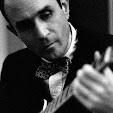
Donn Trenner (1927)


Donn Trenner, Nola's Penthouse Studio, New York, New York, February 1947, photo by William Gottlieb

A belated Happy Birthday to pianist, arranger, and musical director Donn Trenner. Donn was born in New Haven, Connecticut on March 10, 1927 and has been in the music business since the age of 15. After many long, storied years he is back in Connecticut and often performs in New York City. His list of musical associations is just amazing, having performed and/or recorded with everyone from such modern jazz men as Charles Mingus and Stan Getz, to vocalists such as Nancy Wilson and Lena Horne...and not to mention legends such as Ben Webster. But of particular interest to readers is the fact that Donn Trenner is the member of a very exclusive club. A club whose membership is dwindling by the year. Donn is a rare bird indeed as he is one of the last surviving musicians to have played with Charlie Parker! 


Charlie Parker, Chet Baker, Donn Trenner, Larance Marable, unknown, The Tiffany Club, June 1952

To be honest, this may be just another footnote that I read with great interest, but then moved on to fill my head with more musical and historical knowledge, if it weren't for vocalist Shaynee Rainbolt who commented on a post of mine last year. One thing led to another and I found myself exchanging messages with Donn himself. So I took the opportunity to use this connection to ask Donn to go a little deeper into his association with Bird. The facts are pretty straight-forward. On May 29, 1952 the Charlie Parker Quintet opened up for a two and a half week run at The Tiffany Club in Los Angeles. The Tiffany Club was located at 3260 8th Street near the corner of Normandie, a part of LA was jumpin' in the early 1950s. The Haig club was just Northeast a few blocks, not to mention The Cocoanut Grove in The Ambassador Hotel. But that stretch of 8th Street itself was a hub with the 400 Club, The 331, and Agua Caliente all easily within walking distance from one another. Bird by this time had begun his latter-day association with Norman Granz and had most recently recorded for Mercury Records with the Joe Lippman Orchestra back in March in New York. Most of his live appearances at this stage of his career were as a single, that is appearing as a solo star backed by trio or quartet consisting of local musicians. Although Trenner spoke to James Gavin in depth for the latter's dark portrait of Chet Baker, Deep in a Dream, Donn was kind enough to answer some questions of my own about the experience:

A Modernist: Had you played with Parker before the rehearsals for the Tiffany engagement?

Donn Trenner: No, I had never played with him before 1952. 

AM: Tell me about how you got the call for the gig

DT: I received a call from an agent. The agent was Associated Booking Corporation. It's the same agency that Joe Glaser had in New York, only they had a Beverly Hills office. Cliff Aaronson called me and asked me if I would like to put the band together for Bird. And of course I said yes!

AM: What prompted you to hire the musicians you hired?

DT: I had some information from Cliff, that he [Parker] would like to have Larance Marable. And I think that he mentioned Chet Baker, although I knew Chet from all over for a long time. The story that Chet told was totally fictitious. It wasn't a trumpet competition, I called him and hired him.

AM: Did suffer any blowback from the other local musicians who you did not call for the gig?

DT: No, I did not suffer any fallout from anyone for not giving them a call.

AM: How about the claims that Parker changed his playing to allow for Baker's supposed deficiencies?

DT: I don't remember anything about Bird changing his playing to accomodate Baker's playing level. It's very possible. Although Chet was a wonderful player - perhaps inexperienced at that time in his own career, he played very well.

AM: Do you have any particular memories of Bird?

DT: My memories of Charlie were unbelievable. I remember that he loved Mexican food. So very often on breaks at The Tiffany Club we would take him over to a Mexican restaurant and he would stuff himself. He drank a lot. And he put it down rather quickly. But I found him delightful. Very personable. I found no friction or tension in the engagement with him.

AM: How about that photo of Helen Carr with the band?

DT: Of course, Helen sat in one night and that was the night that I guess Bill Claxton was there and took that picture.

Gavin's book provides some more info about the legend that sprang up regarding Baker's selection as the trumpeter in the combo. I can't really recommend the book (it's a tough read at times), but you can take a peek here.

If you want to dive a bit deeper into some of the highlights of Trenner's musical adventures, I strongly recommend this lengthy interview with Donn conducted by Harry Platcow. Enjoy!

Tuesday, March 12, 2013

Garry Winogrand (2013)


Garry Winogrand, New York, 1957, photo by Lee Friedlander 


Los Angeles, 1964


New York, 1968

Those of you keeping score at home may have noticed that I have been on something of a New York kick recently. Well, a good visit to the Big City can do that to a guy! Obviously, someone has been paying attention for not too long after I returned home to San Francisco, the SFMOMA launched its Garry Winogrand photography exhibition. This is the first retrospective of its kind and is segmented into 3 sections: New York 1950-1971, Everywhere else during the same time period, and LA from 1971 until Winogrand's death in 1984. I was fortunate enough to get a preview last week and was knocked out. Frankly, I knew next to nothing about Winogrand walking into the museum that night but was captivated by his work. The photographer is widely being touted for showing both the promise of and disillusionment with the American Dream of post-war Middle Class Society. Who am I to argue? There is a gritty reality to many of his photos that rivals that of his friend and contemporary Lee Friedlander. New York is a city that always looks great in monochrome regardless of the era. It has a depth and texture that is well-served by the lack of color. Winogrand shot almost exclusively in black and white and with a solid third of this exhibit dedicated to New York and its environs over the span of twenty years...well, I think you get my drift. I highly recommend this exhibit if you are going to be in or around San Francisco now through June 2, 2013.

For more information on Winogrand the photographer, Eric Kim's post from last year is positively epic.

For more information on the SFMOMA exhibit, click here.

Wednesday, March 6, 2013

The Andover Shop (2013)


During my very first visit to Boston, Massachusetts last week, I finally had the opportunity to make a pilgrimage to the legendary Andover Shop across the river in Cambridge. What's the fuss, you ask? Well, The Andover Shop is the spot that directly links post-war modern jazz with Ivy League style. It has here that Roy Haynes had his suits custom made: the "slickest sh*t out"in his own words. It was here that a cleaned-up Miles Davis chose the threads that were to be part of his mid-1950s "comeback" image. And it was here that proprietor and acknowledged jazz-fan Charlie Davidson forged life-long friendships with customers such as Chet Baker.


The building itself is a simple unassuming modernist building located on a quaint (yes, I said quaint) New England side-street: 22 Holyoke to be specific. I have to admit, that I was taken a little a back upon arrival...and pleasantly surprised. I expected something along the lines of what Brooks Brothers on Madison Avenue is trying to be: more old club, old world. It is clear here that form followed function. The Cambridge shop is Charlie's second location, he opened the first on Main Street in Andover, Mass. back in 1949 after he left the employ of J. Press. But it was this place, the Cambridge address, which became the place.


I was greeted at the shop by Zach DeLuca who runs the excellent Newton Street Vintage shop on Etsy as well as The Suit Room weblog/Tumblr. Both are highly recommended if you are not familiar with them. I introduced myself formally (we had only met via the 'net) and set about exploring the store with Zach as my guide. I will admit to being slightly overwhelmed as I really wanted to soak it in. It is a dispensary in the best sense of the word: quite organized and well-stocked. The staff, who totaled four on this particular Monday morning, moved through the narrow aisles with knowing ease. 


Gerry Mulligan at The Andover Shop, photo by William Claxton (obscured), 1956

Meeting Charlie was exactly what I had hoped it would be. After some small talk about Roy Haynes and the Newport Jazz Festival, Charlie inquired if I was a musician. When I replied yes and that I played guitar, he responded with the jab, "That's not a real musician!" I expected nothing less. Ice broken, he proceeded to tell me some of his favorite six-stringers and I was very pleased to hear that Barney Kessel was near the top of his list - particularly since the neighboring Berklee School of Music seems to have it out for ol' Barney. Apart from some enjoyable jazz talk, I did pick up some basic, but essential clothier wisdom that the customer should be happy with the garment in the shop. It matters not what the clothier thinks, nor what the tailor may be able to do. This echoed a similar piece of advice that I picked up from Alden years ago (your shoes should feel good when you walk out of the shop...a "break-in" period is something of a myth). As I was paying for my American-made Hickey Freeman Hertling high-rise grey flannel trousers and saying my goodbyes, Charlie held out his hand and said, "I'm really glad you came into the shop today." Thank you Charlie. I am really glad that came into the shop too!

Wednesday, February 27, 2013

New York City (2013)


Rudy's Barbershop, 29th Street at Broadway


The Empire State Building


White Forms by Franz Kline, 1955, MOMA


Oyster Bar, Seventh Avenue and 54th Street

Tuesday, February 19, 2013

Bags & Trane (1978)

I think it's high-time for another guest weblog from that stalwart of natural shoulder style, 'Talk Ivy'Jimmy Frost Mellor, don't you? Well then, take it away, Jimmy...


Bags & Trane, Milt Jackson & John Coltrane, Atlantic 1368, released 1961 (recorded 1959), cover photo by Lee Friedlander

19 years after his conception in New York City and 17 years after his birth, I first encountered a new friend. One that I've had by my elbow for the last 35 years now. Some records are just records, but this one was an instant Mate.

It was 1978 and I was 13, kicking my heels a long way from home and keeping myself busy by giving myself an education sorting through two bookcases filled with old vinyl: my Uncle's record collection, the treasure trove that was to change my life in every respect.

I'd already fallen in love with Hard Bop drumming and images of American Ivy League clothes from those LP sleeves at least two-days ago at this point and was by now very happily hooked on both, creating a daily routine for myself of listening to as much as I could, reading all the sleeve notes and checking out all the visual clues I could get of the style of the genius musicians I'd suddenly stumbled across by accident. I still have my old notebook diaries of tracks, dates and an ever growing series of shopping lists.

I couldn't separate the music from the clothes and from the style of their presentation on those old LP sleeves back then. They were a total sensory experience combining skills from many disciplines all brought together to produce perfect artworks to me. The music, the clothes, the styling, the photography, the typography, the sleeve notes , the smell of the cardboard, the texture of the paper liner, the weight of the thick black vinyl inside.

I tried to talk to my Uncle about all this and he just nodded. "Gesamtkunstwerk", he replied. "Bless you", I said and fetched him a handkerchief...

I'm writing this with my late Uncle's copy of Bags and Trane (Atlantic, 1961) in front of me and it is still a perfect thing to me. A part of the soundtrack of my last 35 years and one of the milestones which marked the start of my real life, after my previous 13 years of moving slowly towards who I was meant to be.

So who was I meant to be? With this LP and others I could tell you about another time I felt I'd found a home at last. A stylish place with nice neighbours who you never minded if they made a noise because the noises they made were so good.

And there were also new clothes to go with it all too! Different clothes. Familiar/Unfamiliar items which captured my imagination just as much as the brilliance of the pairing of Bags and Trane themselves.

I've described what I was up to as me giving myself an education back then, so what did I learn?

1) I needed a haircut ASAP. Something cropped and serious, but a world away from anything 'Skinhead'. My floppy 'Huge Grant' (Did he even have hair like that back then?) style had to go.

2) There can be a hardness in softness/ Checking out the cover shot on the LP the shirt collars and jacket shoulder lines were soft, unstructured and relaxed. But from two of the most disciplined musicians I'd heard so far? Trane especially came across to me as really tough, or maybe that's just what I wanted to project on to him? I liked the idea of 'sloppy' clothes (By regimented English standards) and a razor sharp creative brain at work. I liked the contrast. Later I was to learn that that was actually a very commonplace combination, but what did I know at 13? Before I went to live with my Uncle I only knew City of London Accountants and those in the Legal trade who were all as uniformed as the little lead soldiers in my toy fort.

3) A shirt, a tie and a suit needn't be a shirt, a tie and a suit ! These Ivy League clothes can be wonderfully subversive. Not to most Americans, I agree - who consider them Conservative - but their Conservatism is nothing compared to that of the English... I just fell in love with the idea that a haircut, a shave, a suit, and a shirt and tie could be done on the sly so that it all looked straight from a distance but was really saying something else. That seemed to reflect a part of me that went very deep: to be myself and to get away with it!

And so I went shopping for my first Blue buttondown and slim Dark knitted tie...a story for another day!

- Jimmy Frost Mellor


Tuesday, February 12, 2013

The Street Swingers (1958)


The Street Swingers, Brookmeyer/Hall/Raney, World Pacific Records 1239, 1958

A true anomaly in both image and recording locale of the Pacific Jazz/World Pacific record catalogue is 1958's The Street Swingers LP. Credited to Brookmeyer/Hall/Raney with Osie Johnson and Bill Crow, it is a session nominally led by valve trombonist Bob Brookmeyer (who also provided the liner notes), but featuring compositions by all 3 of the principles - the other 2 being Jim Hall and Jimmy Raney. It was recorded in New York City on December 13 and 16, 1957 at Coastal Studios with production credited to label-owner Richard Bock. The cover photo was shot by Lee Friedlander. It's all very interesting enough, but is why does this warrant our time today?


Jazz on a Summer's Day opening sequence, filmed July 3, 1958, directed by Bert Stern

For me, the image Bob Brookmeyer is a very primary jazz image. Any time I see a photograph of him or hear his name, something in me recalls seeing him in the opening minutes of Bert Stern's beautiful color celluloid document of the 1958 Newport Jazz Festival. Even if for a moment, I remember being an impressionable 19 or 20 year old kid, eager to learn more about jazz and being captivated and confused by Jimmy Giuffre's trio - which seemed to be both hip and square at the same time. Brookmeyer looked more like a U.S. Naval officer with his cropped haircut and aviator glasses - but filtered through an Ivy League lens and playing challenging but funky (yeah that's right, I called him funky) modern jazz. At the time my modest jazz record collection consisted of the basics - Miles, Monk, Coltrane, and a smattering of organ-centric Blue Notes - but here was this lanky, kind-of-goofy-looking white cat ushering me down a whole new path.


Bob Brookmeyer, unknown (possibly Lee Konitz), Bill Crow, Jim Hall, Jimmy Raney, c.1957, photo by W. Eugene Smith

So needless to say, when I spied Brookmeyer in the corner of a W. Eugene Smith photo featured in Sam Stephenson's The Jazz Loft Project book (which I mentioned a couple of weeks ago), it resonated in some subtle way. And of course, seeing Bob engaged in a jam session with two guitarists that I have been paying more and more attention to over the past year and a legendary bass player with whom I have had the pleasure to exchange a few emails, I became more and more intrigued by the candid photograph. There is certainly a feel to The Street Swingers that could only come about due to the collaborative musical experimentation that can result in the best of casual jam sessions. The LP doesn't feel like a Prestige-styled blowing session or a over-formal presentation of compositions that one might find on a Capitol Records disc. The music exists somewhere between those extremes. I began to suspect that the two recording sessions perhaps may have come as a result of the Sixth Avenue sessions.


Brookmeyer, Hall, Raney, 1957, photo by Lee Friedlander taken from the rear of the LP sleeve 

After doing my basic due diligence and re-aquainting myself with the LP, I reached out to bass player Bill Crow. Bill is not only featured in the Smith photo but also on the World Pacific LP. As I did not know the exact date of the photo, I was curious how the Sixth Avenue loft fit into the story. Crow was kind enough to respond to me:

Raney and Hall played together at the loft several times, and Brookmeyer and I were there a lot, too. The two Jims would often be plugged into the same amplifier, since there was only one at the loft. Jim Hall had come to NYC with the Giuffre trio, with Jim Atlas on bass. When Giuffre found that Bob was available, he replaced Atlas with Brookmeyer.

Bill went on to tell me, "We were all living in Greenwich Village at the time, and hung out a lot together. The album was probably Bob's idea." Brookmeyer had an existing relationship with label-owner Dick Bock having had appeared on a number of Pacific Jazz sessions as both a sideman and leader before December 1957. Hall, too, had done a similar number of sessions for Bock in both roles, perhaps most notably the first Chico Hamilton Quintet LPs as well as Hall's debut disc under his own name. Brookmeyer and Raney had a history of collaboration stretching back over several years and several sessions. And Crow, of course, was a big part of the New York scene at the time. 


Lee Friedlander, 1960, photo by William Claxton

One final curious detail is that of the cover photograph. I suspect most who are in interested in 20th Century photography are familiar with Lee Friedlander. And while the cover has a great Winter in New York City feel, it is far from typical Friedlander, as it is not only in color but very much a posed portrait. At the time he was still 6 years away from his first solo museum show and the notoriety that came with it. At the time, he was a commercial photographer who shot a fair number of musicians particularly due to his association with New York's Atlantic Records as a house photographer starting in 1956. The World Pacific one-off gig very likely came about as the result of his friendship with Bock's main-man behind the camera William Claxton. Clax and Lee were good friends, the latter even served as the former's best man at his 1959 wedding to Peggy Moffitt that took place in NYC. As a footnote, when I mentioned how evocative the "street scene" of the cover photo was, Bill Crow corrected me, "Actually, the photo was taken on the roof of the recording studio. Lee wanted more light."

Editor's Note: if anyone knows where Coastal Studios was/is located, drop me a line. I could find only passing references to the facility.

Thursday, February 7, 2013

Donald Byrd (1932-2013)


Donald Byrd, New York City, 1959, photograph by William Claxton

Rest in Peace Professor Byrd

Click here for an alternate shot of the above photo