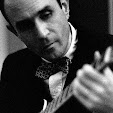
I think it's high-time for another guest weblog from that stalwart of natural shoulder style, 'Talk Ivy's Jimmy Frost Mellor, don't you? Well then, take it away, Jimmy...
Bags & Trane, Milt Jackson & John Coltrane, Atlantic 1368, released 1961 (recorded 1959), cover photo by Lee Friedlander
19 years after his conception in New York City and 17 years after his birth, I first encountered a new friend. One that I've had by my elbow for the last 35 years now. Some records are just records, but this one was an instant Mate.
It was 1978 and I was 13, kicking my heels a long way from home and keeping myself busy by giving myself an education sorting through two bookcases filled with old vinyl: my Uncle's record collection, the treasure trove that was to change my life in every respect.
I'd already fallen in love with Hard Bop drumming and images of American Ivy League clothes from those LP sleeves at least two-days ago at this point and was by now very happily hooked on both, creating a daily routine for myself of listening to as much as I could, reading all the sleeve notes and checking out all the visual clues I could get of the style of the genius musicians I'd suddenly stumbled across by accident. I still have my old notebook diaries of tracks, dates and an ever growing series of shopping lists.
I couldn't separate the music from the clothes and from the style of their presentation on those old LP sleeves back then. They were a total sensory experience combining skills from many disciplines all brought together to produce perfect artworks to me. The music, the clothes, the styling, the photography, the typography, the sleeve notes , the smell of the cardboard, the texture of the paper liner, the weight of the thick black vinyl inside.
I tried to talk to my Uncle about all this and he just nodded. "Gesamtkunstwerk", he replied. "Bless you", I said and fetched him a handkerchief...
I'm writing this with my late Uncle's copy of Bags and Trane (Atlantic, 1961) in front of me and it is still a perfect thing to me. A part of the soundtrack of my last 35 years and one of the milestones which marked the start of my real life, after my previous 13 years of moving slowly towards who I was meant to be.
So who was I meant to be? With this LP and others I could tell you about another time I felt I'd found a home at last. A stylish place with nice neighbours who you never minded if they made a noise because the noises they made were so good.
And there were also new clothes to go with it all too! Different clothes. Familiar/Unfamiliar items which captured my imagination just as much as the brilliance of the pairing of Bags and Trane themselves.
I've described what I was up to as me giving myself an education back then, so what did I learn?
1) I needed a haircut ASAP. Something cropped and serious, but a world away from anything 'Skinhead'. My floppy 'Huge Grant' (Did he even have hair like that back then?) style had to go.
2) There can be a hardness in softness/ Checking out the cover shot on the LP the shirt collars and jacket shoulder lines were soft, unstructured and relaxed. But from two of the most disciplined musicians I'd heard so far? Trane especially came across to me as really tough, or maybe that's just what I wanted to project on to him? I liked the idea of 'sloppy' clothes (By regimented English standards) and a razor sharp creative brain at work. I liked the contrast. Later I was to learn that that was actually a very commonplace combination, but what did I know at 13? Before I went to live with my Uncle I only knew City of London Accountants and those in the Legal trade who were all as uniformed as the little lead soldiers in my toy fort.
3) A shirt, a tie and a suit needn't be a shirt, a tie and a suit ! These Ivy League clothes can be wonderfully subversive. Not to most Americans, I agree - who consider them Conservative - but their Conservatism is nothing compared to that of the English... I just fell in love with the idea that a haircut, a shave, a suit, and a shirt and tie could be done on the sly so that it all looked straight from a distance but was really saying something else. That seemed to reflect a part of me that went very deep: to be myself and to get away with it!
And so I went shopping for my first Blue buttondown and slim Dark knitted tie...a story for another day! - Jimmy Frost Mellor
The Street Swingers, Brookmeyer/Hall/Raney, World Pacific Records 1239, 1958
A true anomaly in both image and recording locale of the Pacific Jazz/World Pacific record catalogue is 1958's The Street Swingers LP. Credited to Brookmeyer/Hall/Raney with Osie Johnson and Bill Crow, it is a session nominally led by valve trombonist Bob Brookmeyer (who also provided the liner notes), but featuring compositions by all 3 of the principles - the other 2 being Jim Hall and Jimmy Raney. It was recorded in New York City on December 13 and 16, 1957 at Coastal Studios with production credited to label-owner Richard Bock. The cover photo was shot by Lee Friedlander. It's all very interesting enough, but is why does this warrant our time today?
Jazz on a Summer's Day opening sequence, filmed July 3, 1958, directed by Bert Stern
For me, the image Bob Brookmeyer is a very primary jazz image. Any time I see a photograph of him or hear his name, something in me recalls seeing him in the opening minutes of Bert Stern's beautiful color celluloid document of the 1958 Newport Jazz Festival. Even if for a moment, I remember being an impressionable 19 or 20 year old kid, eager to learn more about jazz and being captivated and confused by Jimmy Giuffre's trio - which seemed to be both hip and square at the same time. Brookmeyer looked more like a U.S. Naval officer with his cropped haircut and aviator glasses - but filtered through an Ivy League lens and playing challenging but funky (yeah that's right, I called him funky) modern jazz. At the time my modest jazz record collection consisted of the basics - Miles, Monk, Coltrane, and a smattering of organ-centric Blue Notes - but here was this lanky, kind-of-goofy-looking white cat ushering me down a whole new path.
Bob Brookmeyer, unknown (possibly Lee Konitz), Bill Crow, Jim Hall, Jimmy Raney, c.1957, photo by W. Eugene Smith
So needless to say, when I spied Brookmeyer in the corner of a W. Eugene Smith photo featured in Sam Stephenson's The Jazz Loft Project book (which I mentioned a couple of weeks ago), it resonated in some subtle way. And of course, seeing Bob engaged in a jam session with two guitarists that I have been paying more and more attention to over the past year and a legendary bass player with whom I have had the pleasure to exchange a few emails, I became more and more intrigued by the candid photograph. There is certainly a feel to The Street Swingers that could only come about due to the collaborative musical experimentation that can result in the best of casual jam sessions. The LP doesn't feel like a Prestige-styled blowing session or a over-formal presentation of compositions that one might find on a Capitol Records disc. The music exists somewhere between those extremes. I began to suspect that the two recording sessions perhaps may have come as a result of the Sixth Avenue sessions.
Brookmeyer, Hall, Raney, 1957, photo by Lee Friedlander taken from the rear of the LP sleeve
After doing my basic due diligence and re-aquainting myself with the LP, I reached out to bass player Bill Crow. Bill is not only featured in the Smith photo but also on the World Pacific LP. As I did not know the exact date of the photo, I was curious how the Sixth Avenue loft fit into the story. Crow was kind enough to respond to me:
Raney and Hall played together at the loft several times, and Brookmeyer and I were there a lot, too. The two Jims would often be plugged into the same amplifier, since there was only one at the loft. Jim Hall had come to NYC with the Giuffre trio, with Jim Atlas on bass. When Giuffre found that Bob was available, he replaced Atlas with Brookmeyer.
Bill went on to tell me, "We were all living in Greenwich Village at the time, and hung out a lot together. The album was probably Bob's idea." Brookmeyer had an existing relationship with label-owner Dick Bock having had appeared on a number of Pacific Jazz sessions as both a sideman and leader before December 1957. Hall, too, had done a similar number of sessions for Bock in both roles, perhaps most notably the first Chico Hamilton Quintet LPs as well as Hall's debut disc under his own name. Brookmeyer and Raney had a history of collaboration stretching back over several years and several sessions. And Crow, of course, was a big part of the New York scene at the time.
Lee Friedlander, 1960, photo by William Claxton
One final curious detail is that of the cover photograph. I suspect most who are in interested in 20th Century photography are familiar with Lee Friedlander. And while the cover has a great Winter in New York City feel, it is far from typical Friedlander, as it is not only in color but very much a posed portrait. At the time he was still 6 years away from his first solo museum show and the notoriety that came with it. At the time, he was a commercial photographer who shot a fair number of musicians particularly due to his association with New York's Atlantic Records as a house photographer starting in 1956. The World Pacific one-off gig very likely came about as the result of his friendship with Bock's main-man behind the camera William Claxton. Clax and Lee were good friends, the latter even served as the former's best man at his 1959 wedding to Peggy Moffitt that took place in NYC. As a footnote, when I mentioned how evocative the "street scene" of the cover photo was, Bill Crow corrected me, "Actually, the photo was taken on the roof of the recording studio. Lee wanted more light."
Editor's Note: if anyone knows where Coastal Studios was/is located, drop me a line. I could find only passing references to the facility.
Sam Stephenson's 2009 book, The Jazz Loft Project, was a recent holiday gift from my brother. Inspired by an upcoming trip to New York, I finally peeled off the plastic-wrap and and have started digging into it. The photos and text are just fascinating. Of course, it received a respectable amount of attention upon its initial publication, which is always a pleasant surprise for any jazz-related item. It also has an impressive web presence, thanks in no small part to a website dedicated to the project. Be sure to click through the links to access the 10-part radio series.
The Jazz Loft Project, Sam Stephenson, 2009
While Stephenson's book centers around the archives of and the era of photographer W. Eugene Smith, his neighbor and sublettor David X. Young piqued my curiosity. Young was the true start of the 'Sixth Avenue Loft' scene, having moved (illegally) into the space some time in 1953 or 1954. That part of Manhattan was years off from being zoned for residential use, but Young could not pass up the rent of $120 a month for 3 floors of the Mid-town building. Adjusted for inflation, that is less that a grand in today's money. So with a lot of determination, a little ingenuity, and a few well placed bribes, the painter Young innovated the work/live space concept right in the middle of Manhattan.
Jimmy Raney Plays, Jimmy Raney, Prestige LP 156, 1954
Although he initially spent much his time with fellow abstract expressionist painters as Franz Kline and William de Kooning at The Cedar Tavern in Greenwich Village, Young was even more of a jazz fan than his contemporaries and preferred the company of jazz musicians. To that end, he moved an affordable, playable piano into his loft space and began hosting late- night jazz jam sessions.
The Modern Jazz Quartet, The Modern Jazz Quartet, Prestige LP 160, 1954
The sessions began to draw nearly every notable name on the New York scene, spanning several generations of musicians. Recollections by those who were there at the time, name not only the heavy hitters to whom history has been kind, but also many unknowns familiar to only the most fanatical discographers if at all. Miles Davis was there. As was Charlie Mingus, Jimmy Raney, Eric Dolphy, Jim Hall, Bill Crow, and Lee Konitz. In fact the list goes on and on into the hundreds. And while Bird was rumored to have made an appearance (once), it is known that Mingus was there in March 1955 when he learned that Parker had died.
Miles Davis Quartet, Miles Davis, Prestige LP 161, 1954
Although he did regular exhibit in galleries throughout New York and the East Coast, starting with his 1951 show at the Mortimer Levitt Gallery, Young took commercial art jobs to cover rent and keep food on his table. Through his increasing music connections he began doing sleeve design work for Bob Weinstock's Prestige Records, also based in New York City at the time.
Art Farmer Quintet, Prestige 177, 1954
What is interesting and notable about Young's work compared to contemporaneous LP graphic designers such as John Hermansader or even Reid Miles, was Young's direct connection to the musicians. Young was not only a fan of modern jazz, but he spend a great deal of time in their company. To take it even further, it can be argued that in providing the venue for the laboratory-work that is the jam session, he had a deeper understanding of the music than even some of the most dyed-in-the-wool fans.
Leonard Feather Presents Jazz Club U.S.A. in Sweden, Jimmy Raney All Stars, Prestige LP 179, 1955
Also of note is the period of time when Young was doing his work for Prestige. The 10-inch Long Playing (LP) record was still relatively new, having been introduced to the record-buying public in 1948, but not catching on with jazz labels such as Blue Note until 1951. Of course, by the middle of the decade, the 10-inch LP was all but supplanted by the 12-inch LP, which not only provided higher-fidelity and more playing time, but also a larger canvas for commercial designers to work with.
Encores, Phil Woods New Jazz Quintet featuring Jon Eardley, Prestige LP 191, 1955
Young was finally evicted from the space in 1964 and so ended the first chapter in New York's jazz loft scene story - although those familiar with the history of the music know it was just the beginning of that particular narrative. He managed to stay in Manhattan and continued to work up until his death in 2001. The address 821 Sixth Avenue (or Avenue of the Americas if you must) is now a legendary one and David X. Young's contribution to the music of the era can not only be seen on these 10 inch LP sleeves, but also in the music contained therein - as many of these combos first played together up in Young's loft.
Teddy Charles featuring Bobby Brookmeyer, Prestige LP 178, 1955
Editor's Note: as I continue to "discover"more LP cover art by Young, I will post them here. Please check back.
To view a gallery of Young's paintings, click through to his official site here.
For more Prestige Records 10" and 12" LP sleeves, check out this excellent site.
One of my lasting childhood memories, is that of staying home from school when I was sick. I would typically stay in bed through the morning, sleeping off whatever bug I had. Some time close to Noon, I would gather my blankets and migrate to the couch. It was there I would spend the next few hours, sipping 7 UP, eating soup, and watching The Twilight Zone. The television station was KTLA, a local Los Angeles area station owned by the singing cowboy Gene Autry from 1964 through 1995 (the station was also home to Autry's professional baseball team the California Angels, who were our team in those suburban days). If memory serves me correct, The Twilight Zone was aired weekdays at Noon - possibly with 2 episodes back-to-back, obviously well into syndication as this was the late-1970s and early-1980s. Between this and KTLA's annual Fourth of July Twilight Zone marathon, it was ensured that I saw nearly all 156 of the original episodes at least a couple of times. So it was with these memories at the back of my mind that I embarked upon the first season of The Twilight Zone last month when I had the flu.
Rod Serling, CBS Television Studios, New York, 1955, photo by Loomis Dean
The first season of the original series ran from October 1959 through July 1960 on CBS in the USA. It was shown on Fridays at 10:00 PM Eastern Time. All of the episodes of the first season had a running time of just under 30 minutes. According to this exhaustive listing, the first 36 episodes were pre-empted 3 times and 2 reruns were shown before its inaugural run was complete. It was, of course, the brainchild of a very peculiar figure in television history: Rod Serling. Serling, who turned 35 during the first season, had already won 3 Emmy awards for his screenwriting efforts before the series debuted. The series would earn him his fourth. Serling, who had fought for the U.S. Army and earned a Purple Heart during the Second World War in the Philippines, had his fair share of conflict with both sponsors and censors in his early television career as he was not shy about tackling controversial social and political issues. At the time in a televised interview with Mike Wallace, he called The Twilight Zone the culmination of 12 years work. Perhaps most important was Serling's attitude towards the serial. In the same interview with Wallace he referred to the episodes as "adult...extremely polished films." He was also quick to categorize them as a mix of fantasy, imagination, and science fiction. In short, it was a very serious view of the burgeoning entertainment medium and one that set him apart from many of his contemporaries.
The Twilight Zone, Season One introduction, second variation
Seeing these early episodes again, thirty years since I first experienced them, I was not only pleasantly surprised by the longevity of writing but enjoyed discovering the many Mid-century modern Easter eggs that I know understand helped shaped my young consciousness. The overall mood and style is still arresting. If modern jazz captured the psychosis of post-war years in sound (as has often been argued), I can think of no single television program that managed to do the same on dramatic terms. There is an over-arching anxiety the permeates every episode. Not the manufactured fright of the Red Scare, but the rather palatable fear of modern life in the shadow of the mushroom cloud. There is the anxiety that society is not what it thought it was. And there is the dissolution of the American Dream, an idea upon which the counterculture of the late-1960s would hinge itself. Sure, not every episode hits the mark, particularly over the course of the first few months over which principle writer Serling finds his footing. But when it is good it is good in a way the resonates in a manner of the some of the best art of our time. Did television ever really get any better?
Alfred Hitchcock and Bernard Hermann on the set of Psycho, c.1959-1960
For us Moderns, there are treats at every turn. The original theme music, used throughout the first season, was composed by no less than the maestro of suspense himself Bernard Hermann. Hermann was quite well known by this time having recently scored Alfred Hitchcock's Vertigo. In fact, he was working concurrently on the score for Psycho at the same time as he scored some of The Twilight Zone episodes (which he did in addition to the main title) and there are some stylistic similarities between the two ventures at times. It's a moody piece, not quite as aggressively avant garde as the theme written by Marius Constant for the second season (widely known to most as the theme to the series) and played by jazz great Howard Roberts on his Fender Telecaster electric guitar. The opening titles to the first season were created by the mad genius animators over at UPA and clearly echo the abstract feel of some of their more well-known work, particularly in the realm of children's animations. In fact, one of the cool things about the show is it's clear New York - Los Angeles axis, something not always evident in productions during this era. There is a definite New York feel to much of the show's content and story lines. But much of the production was done in and around Los Angeles (Serling himself remained a New York resident for quite some time). And of course, there are the many wonderful actors and directors who make their appearances at all points of their career junctures. It is simply amazing how many familiar faces grace the small screen over the course of the 18 hours of footage from the first season alone. But rather than bore you with a laundry list of names, I will just remark how surprised and pleased I was to see jazz and fashion photographer William Claxton's name appear onscreen as the director of The Last Flight (episode 18, February 5, 1960).
In parting, above is the Mike Wallace September 22, 1959 television interview that I referenced earlier in today's weblog. Clocking in at just over 20 minutes, it provides great context to this cornerstone of popular American culture at it's birth.
I recently stumbled upon this wonderful set of photos from the Life magazine archives, taken some time in late 1954. They originally appeared in the December 20th issue of the magazine that year as part of the profile of the Mambo craze which was near it's zenith. The venue was The Macumba on Grant Street (between Bush and Sutter Streets) in downtown San Francisco, right on the border of Chinatown. It was an upstairs dancehall opened in the Summer of '54 that featured popular Latin orchestras such as Tito Puente as well as bandleaders like Duke Ellington and Stan Kenton. For San Francisco Latin Jazz musicians of a certain age, it is well remembered as a hub of sorts for a scene whose influence is still felt today in the Bay Area. For more information on this era, I highly recommended reading this excellent interview with Tjader sideman Benny Velarde.
Tjader at the time of these photos was in his ascension. He had left the George Shearing Quintet in the Spring of the year and quickly set about forming his Modern Mambo Quintet, deeply influenced by the music he had experienced in New York City while working with Shearing over the previous year. In San Francisco, he surrounded himself with a roster of excellent musicians and cut his first Mambo discs for Fantasy Records. As a live attraction he was quite popular in both dance halls such as The Macumba as well as jazz clubs such as The Black Hawk. It is interesting to note on how well put together the Quintet was even after just a few short months together at the time of these photos. Ivy Leaguers will most certainly notice the 3/2 flannel blazers, button-down shirts, and Repp ties that make up the band uniform! Horn-rims look to be optional though...




 Posts